
Key Person Life Insurance: What It Is, How It Works, and When a Business Needs It
Key person life insurance helps protect a business when one owner, executive, rainmaker, or critical employee is so important that their death would create a serious financial problem for the company.
This page explains what key person life insurance is, who should be covered, how much coverage may make sense, who owns the policy, who receives the death benefit, and how it differs from buy-sell funding and SBA loan life insurance.

Scott Benton (a.k.a. Coach B.)
Author: Scott Benton, Licensed Life Insurance Agent (Coach B. Insurance)
Experience: Serving families since 1992
Disclosure: Coach B. Insurance may be compensated if you purchase through our agency. Recommendations are based on fit, underwriting, and clarity — not pressure.
Editorial note: This page is educational. Policy ownership, beneficiary structure, underwriting, and tax treatment should be reviewed with legal and tax professionals for business planning cases.
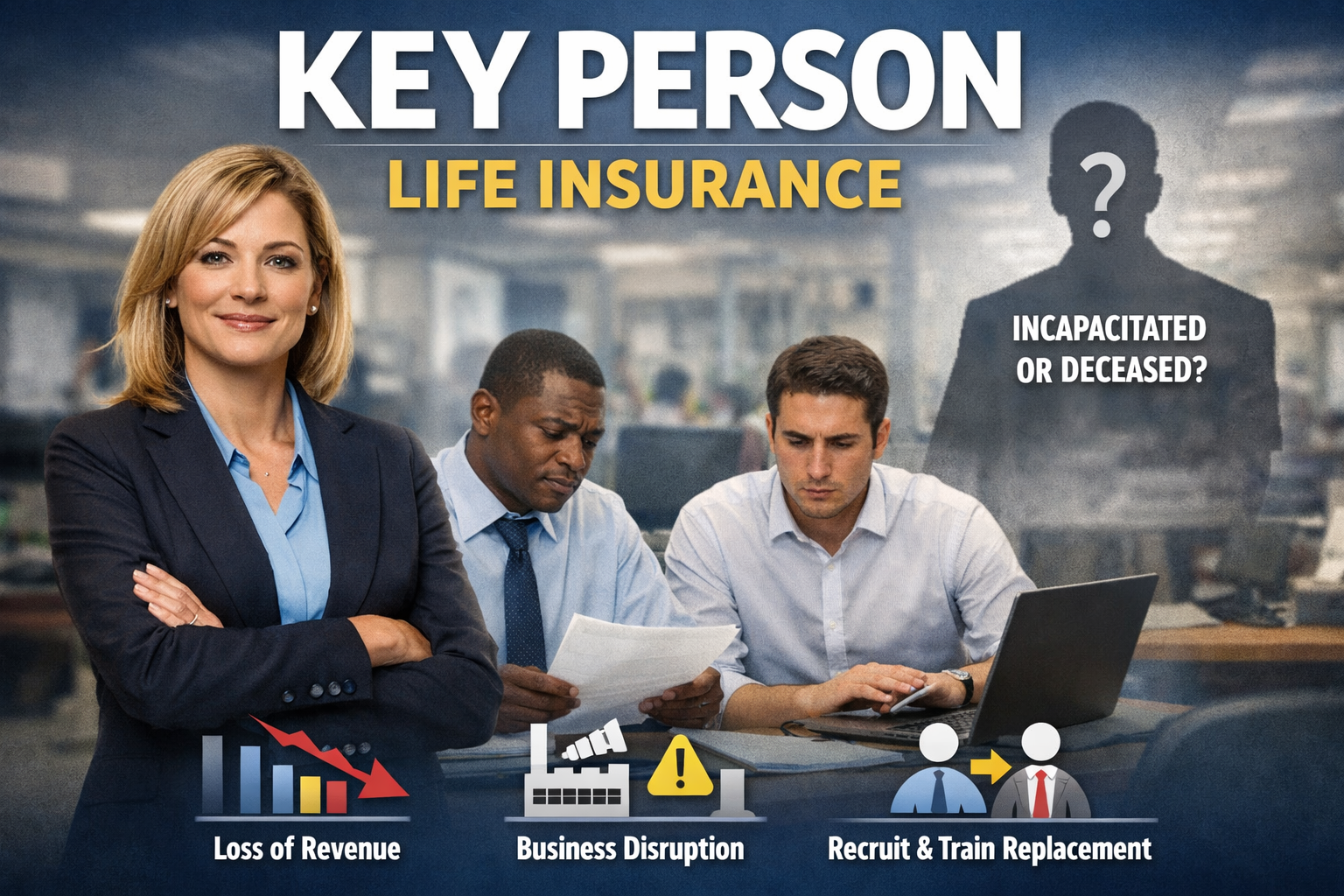
- What key person life insurance is
- Who the key person usually is
- How businesses use the payout
- How much coverage may be needed
- How it differs from buy-sell and SBA loan coverage
What Is Key Person Life Insurance?
Key person life insurance is a policy a business buys on the life of an owner, executive, or important employee whose death would financially hurt the company.
In the most common setup, the business owns the policy, pays the premiums, and is the beneficiary. If the insured key person dies, the business receives the death benefit.
Simple definition
- The business buys the policy
- The business usually pays the premiums
- The business usually receives the benefit
- The goal is business protection, not family protection
Who Counts as a Key Person?
Founder or owner
If the business depends heavily on one owner’s leadership or reputation, that owner may be the key person.
Top salesperson
A business can be highly exposed if one person drives a large share of revenue or client relationships.
Executive or manager
Some businesses rely on one operator whose loss would disrupt the entire company.
Specialized employee
A uniquely skilled employee can be a key person if replacing them would be costly or slow.
Why Businesses Buy Key Person Life Insurance
Cash flow protection
The death benefit can help the business stabilize financially after losing a critical person.
Recruiting and transition costs
Replacing a key person may require search costs, training costs, and time to rebuild productivity.
Lender comfort
Some lenders want protection if the business depends heavily on one owner or guarantor. :contentReference[oaicite:1]{index=1}
Business continuity
The payout can help the company keep operating while leadership, revenue, or key relationships are rebuilt.
How Key Person Life Insurance Works
1. The business identifies the key person
The company decides whose loss would create the biggest financial disruption.
2. The policy is purchased
The business usually owns the policy and pays the premium.
3. The business is usually beneficiary
If the key person dies, the death benefit is generally paid to the company.
4. The business uses the funds
The money can help cover disruption, replacement, recruiting, lender concerns, or other continuity needs.
Who Owns the Policy and Who Gets the Money?
In a typical key person arrangement, the business owns the policy and is the beneficiary. That is different from personal life insurance, where a spouse, child, or trust is often the beneficiary.
This is one of the biggest differences between key person coverage and family-protection coverage.
Typical setup
- Business owns the policy
- Business pays the premium
- Business is beneficiary
- Funds are used for business continuity
How Much Key Person Coverage Might a Business Need?
There is no one perfect formula. The right amount usually depends on how much revenue, leadership value, or financing risk is tied to that person.
Some businesses look at replacement cost. Others look at lost revenue, debt exposure, or the cost of a transition period. The goal is not a random big number. The goal is enough financial cushion to keep the business stable.
Coverage planning often considers
- Revenue tied to the key person
- Recruiting and replacement costs
- Lender exposure
- Business valuation or owner role
- Time needed to recover operationally
Best Types of Life Insurance for Key Person Coverage
Term life insurance
Often the best starting point when the business wants straightforward protection at a lower cost.
Explore Term Life Insurance →Whole life insurance
Can make sense when the business wants permanent protection and a longer planning horizon.
Explore Whole Life Insurance →No-exam options
Sometimes useful when speed matters, though fit depends on the amount needed and the insured’s profile.
Explore No Medical Exam Options →How Key Person Insurance Differs From Buy-Sell Life Insurance
| Topic | Key Person Life Insurance | Buy-Sell Life Insurance |
|---|---|---|
| Main purpose | Protect business operations after losing a critical person | Fund the ownership buyout after an owner dies |
| Typical beneficiary | The business | Depends on agreement structure |
| Main problem solved | Revenue and continuity disruption | Ownership transfer and succession |
How Key Person Insurance Differs From SBA Loan Life Insurance
SBA-loan life insurance is mainly about satisfying a lender and protecting the unpaid balance if a borrower or key guarantor dies. Key person insurance is broader business protection. It is meant to help the company survive the loss of a critical person, whether or not a lender is involved. :contentReference[oaicite:2]{index=2}
Use the SBA page if your issue is
- Loan approval
- Lender requirements
- Collateral assignment
- Protecting the unpaid balance
Protect the Business Before One Loss Becomes Multiple Problems
When the wrong person dies, the business can lose revenue, leadership, lender confidence, and stability all at once. Key person life insurance is designed to give the company breathing room when that happens.
Biggest Mistakes Businesses Make With Key Person Coverage
No coverage at all
The business knows one person is critical but never actually insures the risk.
Too little coverage
The policy amount does not reflect the real disruption the business would face.
Wrong ownership setup
If the business-protection goal is clear, the policy ownership and beneficiary setup should reflect that goal.
No review over time
A key person’s value to the business can change as the company grows or roles shift.
Helpful Next Pages
SBA Loan Life Insurance
Best next page if your main issue is lender-required coverage for a business loan.
Explore SBA Loan Coverage →Collateral Assignment of Life Insurance
Best next page if your issue is how lender rights attach to the policy.
Explore Collateral Assignment →Funding a Buy-Sell Agreement
Best next page if the issue is ownership transfer after an owner dies.
Explore Buy-Sell Funding →Are Life Insurance Premiums Deductible?
Best next page if you want a broader tax-treatment explainer for business life insurance situations.
Explore Tax Page →Frequently Asked Questions About Key Person Life Insurance
What is key person life insurance?
It is life insurance a business buys on a critical owner or employee whose death would financially hurt the company.
Who owns a key person life insurance policy?
In the most common setup, the business owns the policy, pays the premiums, and is the beneficiary.
Who gets the death benefit?
Usually the business, because the goal is to protect the company from the financial impact of losing that key person.
How much key person insurance does a business need?
It depends on how much revenue, leadership value, debt exposure, or replacement cost is tied to that person.
How is key person insurance different from buy-sell life insurance?
Key person insurance protects business continuity, while buy-sell life insurance is mainly used to fund an ownership transfer after an owner dies.


