
Collateral Assignment of Life Insurance: What It Is, How It Works, and Why Lenders Require It
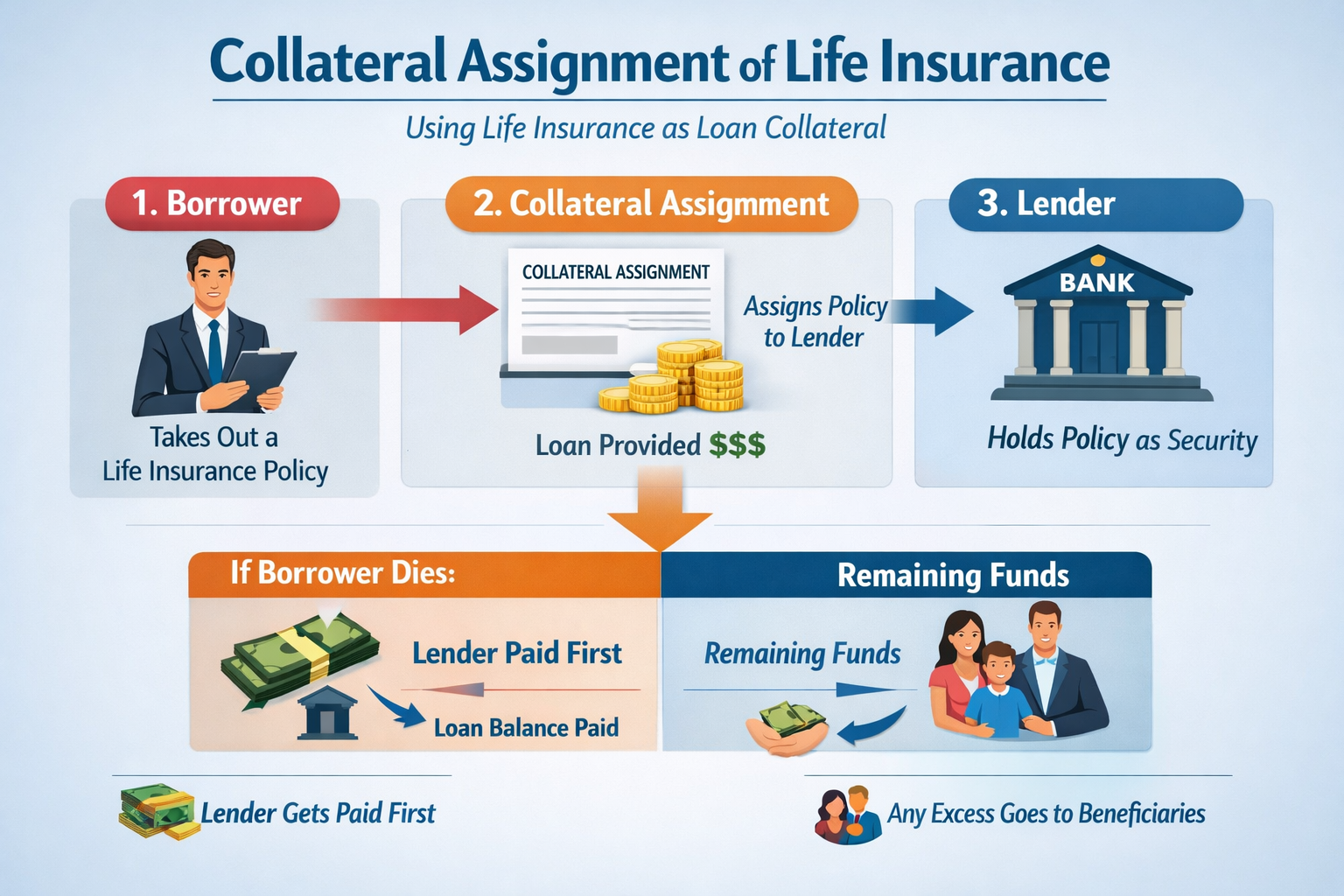
Collateral assignment of life insurance means you use a life insurance policy as security for a loan. If you die before the loan is repaid, the lender gets paid first up to the amount still owed, and any remaining death benefit goes to your beneficiary.
This is common with business loans, SBA financing, commercial borrowing, and some larger personal loan situations. The goal is not to take your life insurance away from your family. The goal is to protect the loan while still preserving the remaining benefit for the people you care about.

Scott Benton (a.k.a. Coach B.)
Author: Scott Benton, Licensed Life Insurance Agent (Coach B. Insurance)
Experience: Serving families since 1992
Disclosure: Coach B. Insurance may be compensated if you purchase through our agency. Recommendations are based on fit, underwriting, and clarity — not pressure.
Editorial note: This page is educational. Assignment requirements, lender forms, ownership rules, and release procedures vary by loan type, carrier, and state.
- What collateral assignment means
- Who gets paid first if you die
- How it differs from naming a lender as beneficiary
- What policy types can be used
- What happens when the loan is paid off
What Is Collateral Assignment of Life Insurance?
A collateral assignment allows a lender to claim part of a life insurance death benefit if the borrower dies before the loan is repaid. The lender is not becoming the full owner of the policy. Instead, the lender has a temporary right to be paid back from the death benefit up to the unpaid loan amount.
After the lender is paid, any remaining money usually goes to the named beneficiary.
In simple terms
- You still own the policy
- Your beneficiary usually stays in place
- The lender has a limited claim tied to the loan
- Only the unpaid balance is usually protected
How Collateral Assignment Works
1. You apply for a loan
The lender wants protection in case the borrower dies before the balance is repaid.
2. The lender requires life insurance
The borrower may need to buy coverage or assign an existing policy to satisfy the loan requirement.
3. The assignment form is completed
The policy is assigned as collateral so the lender has a formal claim on the unpaid balance.
4. If death occurs
The lender is paid what is still owed, and the remaining death benefit usually goes to the beneficiary.
Who Gets the Death Benefit?
This is the part most people care about most. With collateral assignment, the lender does not usually take the whole death benefit unless the unpaid loan balance equals or exceeds the policy amount.
In most normal setups, the lender gets only the amount still owed, and your beneficiary receives the rest.
Typical payout order
- Lender gets the unpaid loan balance first
- Remaining proceeds go to the beneficiary
- If the loan is already paid off, the assignment should no longer matter
Collateral Assignment vs Naming the Lender as Beneficiary
| Feature | Collateral Assignment | Lender Named as Beneficiary |
|---|---|---|
| Family can still receive remaining money | Usually yes | Not always |
| Lender gets only what is owed | Usually yes | Not necessarily |
| Usually tied to the loan balance | Yes | Not always |
| Usually temporary | Yes | Can be much broader |
In most ordinary loan-protection situations, collateral assignment is the cleaner structure because it protects the lender without unnecessarily replacing the family’s beneficiary rights.
When Lenders Commonly Require Collateral Assignment
SBA loans
Collateral assignment is common when a business owner’s death could materially affect repayment.
Business expansion loans
Lenders may want the loan protected if the borrower is central to revenue or operations.
Commercial real estate financing
It can be used when a key borrower or guarantor is essential to the deal structure.
Buy-sell or ownership financing
It may be used when debt and succession planning overlap.
Need Coverage for Loan Approval?
The right policy for collateral assignment is usually the one that covers the loan properly, fits the term of the debt when possible, and stays affordable enough to keep active.
What Type of Life Insurance Can Be Used?
Term life insurance
Often the best fit when the loan has a defined timeline and you want lower-cost coverage tied to that debt period.
Explore Term Life Insurance →Whole life insurance
Can be used in some cases, especially where permanent coverage is already part of the broader plan.
Explore Whole Life Insurance →Universal life insurance
May work in some financing setups, but it is usually chosen for broader planning reasons, not just the assignment itself.
Explore Universal Life Insurance →How Much Coverage Do You Need?
As a rule of thumb, the life insurance amount should usually be enough to cover the loan balance being protected. In some cases, families or business owners choose higher coverage so the lender can be paid while beneficiaries still receive a meaningful remaining amount.
The right number depends on the unpaid debt, the purpose of the coverage, and whether the policy is protecting only the loan or the family too.
Think about
- Current loan balance
- How long the debt will last
- Whether family protection is also a goal
- Whether business continuity is part of the plan
Can Collateral Assignment Be Removed?
Yes, usually. Once the underlying loan is paid off or otherwise satisfied, the assignment should typically be released so the lender no longer has a claim against the policy.
This is one reason good recordkeeping matters. If the debt is gone, you want the release documented properly.
Usually happens after
- The loan is repaid
- The lender signs a release
- The carrier records the release if required
- The policy returns to normal beneficiary-only payout treatment
Why Business Owners Use This Strategy
Loan approval support
It can help satisfy lender requirements when one owner or borrower is central to the business.
Family protection
It can still preserve remaining death benefit for family after the debt is handled.
Business continuity
It helps reduce the risk that a sudden death turns a business loan into a family or company crisis.
Helpful Next Pages
Life Insurance Beneficiaries
Best next page if you want to understand who ultimately receives the remaining payout.
Explore Beneficiaries →Life Insurance Claim Process
Best next page if you want to understand how a payout is actually filed and processed after death.
Explore Claim Process →Life Insurance to Secure an SBA Loan
Best next page if your assignment need is specifically tied to SBA financing.
Explore SBA Loan Page →Term Life Insurance
Best next page if you need lower-cost coverage to match a loan with a defined term.
Explore Term Life Insurance →Frequently Asked Questions About Collateral Assignment of Life Insurance
What is collateral assignment of life insurance?
It is a way to use a life insurance policy as security for a loan, so a lender can be paid from the death benefit if the borrower dies before the debt is repaid.
Does my family still get money if there is a collateral assignment?
Usually yes. The lender is typically paid what is still owed first, and any remaining death benefit goes to the named beneficiary.
Is collateral assignment permanent?
Usually not. It is generally tied to the loan and should be released once the debt is paid off.
Can term life insurance be used for collateral assignment?
Yes. Term life is commonly used when the debt has a defined time horizon and affordable loan protection is the goal.
How is collateral assignment different from naming a lender as beneficiary?
Collateral assignment usually limits the lender’s claim to what is still owed and preserves the remaining death benefit for the beneficiary, while naming a lender as beneficiary can be broader.
Protect the Loan Without Giving Away the Whole Policy
That is usually the real value of collateral assignment. It gives the lender protection while still keeping your life insurance connected to the people or goals you actually want to protect.


