
Whole Life Insurance Quotes: Compare Permanent Coverage, Cash Value, and Fixed Premiums
Whole life insurance is permanent life insurance designed to provide lifetime coverage, fixed premiums, a death benefit, and cash value that can build over time.
Coach B. Insurance helps shoppers compare whole life insurance quotes, cash value features, final expense whole life, no-exam whole life, and other permanent coverage options before committing to a long-term policy.
The best whole life policy is not always the lowest premium. The right fit depends on your age, health, budget, death benefit, premium design, cash value expectations, riders, and whether you truly need permanent coverage.
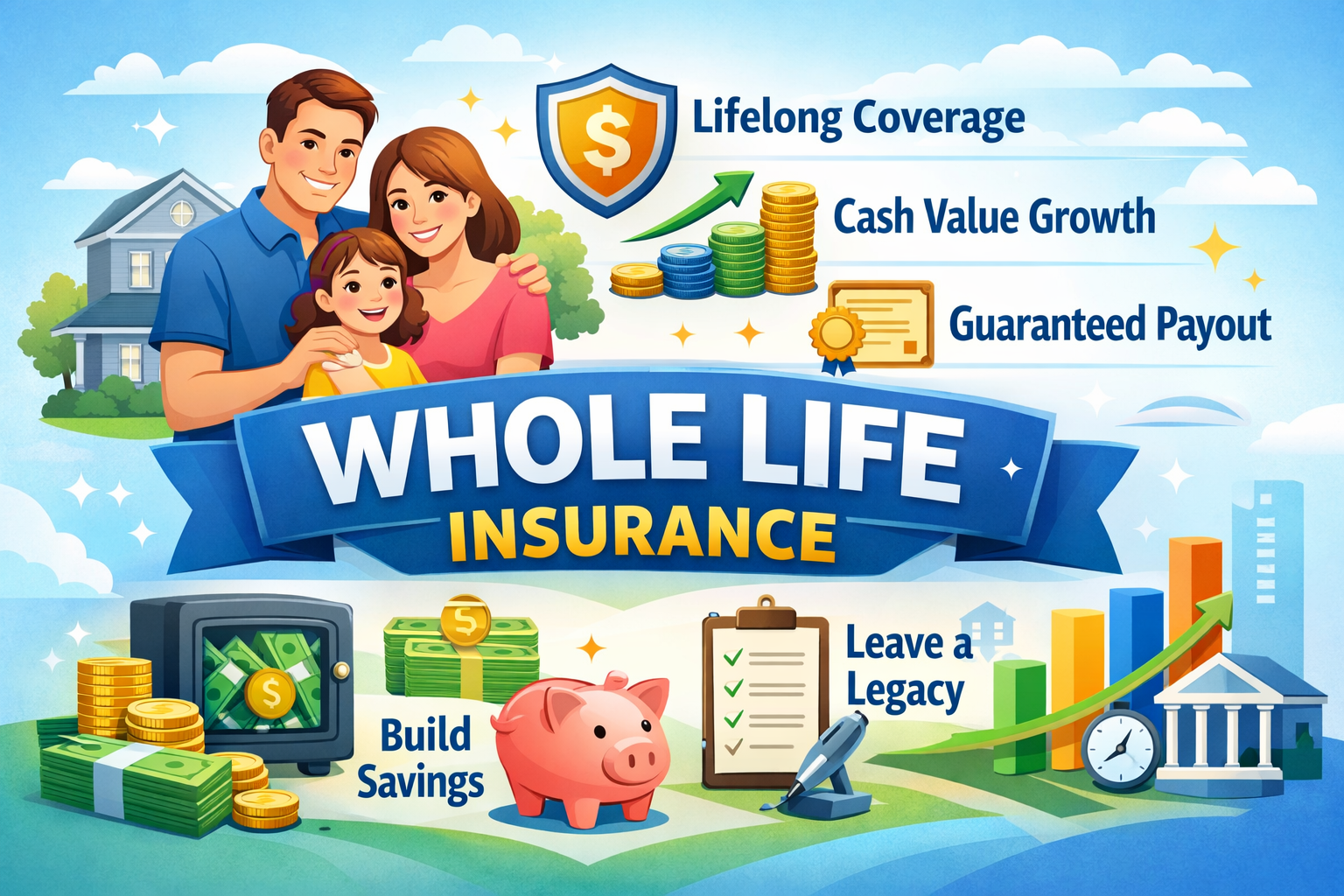
- Whole life insurance is permanent coverage designed to last for life.
- Premiums are typically fixed when the policy is structured properly.
- Whole life can build cash value over time.
- It usually costs more than term life for the same death benefit.
- It fits permanent needs better than temporary income or mortgage protection.

Scott Benton | Coach B. Insurance
Author: Scott Benton, Licensed Life Insurance Agent
Experience: Serving families since 1992
Phone: (800) 342-1537
Office: 10229 Hamlet Court, Union, KY 41091
Disclosure: Coach B. Insurance may be compensated if you purchase through our agency or referral partners. Quotes, rates, cash values, dividends, underwriting, guarantees, policy loans, riders, exclusions, and availability vary by carrier, product, state, age, health, tobacco use, and coverage amount.
What Is Whole Life Insurance?
Whole life insurance is a type of permanent life insurance that can stay in force for your entire life as long as the policy is kept active and premiums are paid according to the contract.
Unlike term life insurance, whole life is not built around a 10, 20, or 30-year expiration date. It is usually designed for long-term protection, predictable premiums, a death benefit, and cash value that may build inside the policy.
Lifetime coverage
Whole life is designed to stay in force for life when premiums are paid and policy terms are followed.
Fixed premiums
Many whole life policies offer predictable premiums that do not increase with age.
Cash value
Whole life can build cash value that may be accessible through policy options.
Legacy planning
Some buyers use whole life to leave a death benefit or help with permanent family needs.
Whole Life Insurance Comparison Chart
Whole life is often compared with term life, universal life, and final expense coverage. The best option depends on whether your need is temporary, permanent, simple, flexible, or burial-focused.
| Policy Type | Best For | Main Strength | What to Watch For |
|---|---|---|---|
| Whole Life Insurance | Lifetime coverage, fixed premiums, cash value, legacy planning. | Permanent protection with predictable structure. | Usually costs much more than term for the same death benefit. |
| Term Life Insurance | Income replacement, mortgage protection, raising children, temporary needs. | Large death benefit for lower initial cost. | Coverage expires after the term unless renewed, converted, or replaced. |
| Universal Life Insurance | Flexible permanent coverage and buyers comfortable managing policy funding. | More flexibility than traditional whole life. | Can be more complex and may require ongoing policy review. |
| Final Expense Whole Life | Seniors wanting smaller permanent coverage for burial and final bills. | Simple purpose and smaller coverage amounts. | Waiting periods, health questions, and graded benefits can vary. |
How Whole Life Insurance Works
A whole life policy has several moving parts. Before comparing quotes, you should understand the death benefit, premium design, cash value, surrender value, riders, and policy loan rules.
Choose coverage
Select a death benefit based on lifetime needs, final expenses, legacy goals, or permanent protection.
Set premium design
Compare life-pay, limited-pay, or other structures depending on the product and carrier.
Build cash value
Cash value may build over time according to the policy’s schedule and contract terms.
Keep policy active
Pay premiums and manage loans, withdrawals, riders, and policy changes carefully.
Cash Value, Death Benefit, and Surrender Value Explained
Cash value is one of the main reasons people compare whole life insurance, but it is often misunderstood. Cash value is not the same as the death benefit, and surrender value may not equal total cash value.
| Term | What It Means | Why It Matters |
|---|---|---|
| Death Benefit | The amount paid to your beneficiary if you pass away while the policy is active. | This is the core protection your family or beneficiary receives. |
| Cash Value | The internal policy value that may build over time inside a permanent life insurance policy. | May be accessed through loans, withdrawals, surrender, or certain policy options. |
| Surrender Value | The amount you may receive if you cancel the policy, after loans, charges, or adjustments. | Can be lower than cash value, especially in early policy years. |
| Policy Loan | Money borrowed against cash value under the policy’s loan provisions. | Loans accrue interest and can reduce cash value or death benefit if not managed. |
| Dividend | A possible payment on some participating policies. | Dividends are not guaranteed and should not be treated as a promise. |
Best Whole Life Insurance by Situation
Lifetime Coverage Buyers
Whole life may fit if you want coverage that does not end after a term period.
Legacy Planners
Some buyers use whole life to leave a predictable death benefit to family or beneficiaries.
Final Expense Shoppers
Smaller whole life policies may help seniors plan for funeral, burial, cremation, and final bills.
Cash Value Shoppers
Whole life may appeal to buyers who want permanent protection with an internal cash value component.
What Affects Whole Life Insurance Quotes?
Whole life quotes can vary widely because you are not only comparing a death benefit. You are comparing the policy design, premium structure, guarantees, riders, and cash value schedule.
Age
Younger applicants usually have lower premiums for the same policy design.
Health
Health history, prescriptions, tobacco use, build, and underwriting class can affect pricing.
Death Benefit
Higher coverage amounts usually cost more because the insurer takes on more risk.
Premium Design
Life-pay, 10-pay, 20-pay, and other structures can change the premium dramatically.
Cash Value Design
Different policies can build cash value differently, especially in early years.
Riders
Riders can add benefits but may increase premium or change policy values.
Carrier
Each company can price, underwrite, and design whole life policies differently.
State Availability
Product availability, riders, and underwriting rules can vary by state.
How to Compare Whole Life Insurance Quotes the Right Way
Whole life quotes should not be compared only by monthly premium. Two policies with the same premium can have very different death benefits, riders, cash values, surrender values, loan rules, and long-term guarantees.
| Question to Ask | Why It Matters | What You Want to See |
|---|---|---|
| Is the death benefit the same? | A lower premium may simply mean less coverage. | Compare equal face amounts before judging price. |
| Is the premium design the same? | Life-pay and limited-pay policies can look very different. | Know how long premiums are required. |
| What are the guaranteed values? | Guaranteed values show what the contract promises. | Review guaranteed cash value and guaranteed death benefit. |
| Are dividends assumed? | Non-guaranteed values can make a policy look stronger than guaranteed values. | Separate guaranteed and non-guaranteed projections. |
| How do loans work? | Loans can reduce cash value and death benefit if not managed. | Understand loan interest, repayment, and impact on beneficiaries. |
| Are riders included? | Riders can add benefits but increase cost or change policy design. | Compare policies with the same riders when possible. |
Whole Life vs Term Life: Which Is Better?
Whole life is not automatically better than term life, and term life is not automatically better than whole life. The better policy is the one that matches the job your coverage needs to do.
Whole life may be better if...
- you need lifetime coverage
- you want fixed premiums
- you want cash value potential
- you are planning for final expenses or legacy goals
- you can afford the long-term premium
- your need does not disappear after 10, 20, or 30 years
Term life may be better if...
- you need the largest death benefit for the lowest initial cost
- you are protecting income during working years
- you want mortgage or child-raising protection
- your need has a clear end date
- you do not need cash value
- your budget cannot support permanent coverage
Whole Life Cash Value Planning
Cash value can be useful, but it should be understood clearly. It usually takes time to build, may be affected by policy charges or loans, and should be reviewed using an official illustration rather than a generic promise.
Early years
Cash value may be limited early because whole life is built for long-term policy ownership.
Middle years
Cash value may become more useful as the policy matures and values accumulate.
Later years
Cash value and death benefit planning should be reviewed before loans, withdrawals, or policy changes.
Want to estimate cash value?
Use the whole life cash value calculator as an educational planning tool, then request an actual illustration before buying or changing a policy.
Use the Cash Value Calculator →When Whole Life Insurance May Not Be the Best Fit
Whole life can be valuable for the right buyer, but it is not the best choice for every life insurance need. The most common mistake is buying permanent coverage when the actual need is temporary and the budget would be better served by term life.
- You need a large death benefit but have a limited monthly budget.
- Your main goal is temporary income replacement.
- You only need coverage until the mortgage is paid off.
- You do not understand the cash value, loan, or surrender rules.
- You are comparing quotes without reviewing illustrations.
- You may cancel early and lose value due to surrender charges or low early cash value.
- You are buying because of cash value without needing permanent insurance.
- You have not compared term, final expense, or universal life options.
Common Whole Life Insurance Mistakes
- Comparing whole life quotes only by monthly premium.
- Ignoring guaranteed vs non-guaranteed values.
- Buying too little death benefit because permanent coverage costs more.
- Assuming cash value is the same as the death benefit.
- Not asking how policy loans affect the death benefit.
- Not reviewing surrender values before buying.
- Confusing whole life with final expense or universal life.
- Buying whole life when term life better fits the real need.
Best Next Page Based on Your Goal
Need affordable family coverage?
Term life may provide more death benefit for a lower initial premium.
Explore Term Life →Need cash value details?
Estimate how whole life cash value may work over time.
Cash Value Calculator →Need burial coverage?
Final expense may be the better version of whole life for smaller senior needs.
Explore Final Expense →Need permanent flexibility?
Universal life may fit buyers who want flexible permanent coverage.
Explore Universal Life →The Bottom Line
Whole life insurance can be a strong fit when you need lifetime protection, fixed premiums, cash value potential, and a policy designed for permanent planning.
But whole life is not the right answer for everyone. Compare it against term life, final expense, and universal life before choosing, and always review policy illustrations before buying.
Helpful Related Pages
Term vs Whole Life
Best next page if you are deciding between affordable temporary coverage and permanent cash value coverage.
Compare Term vs Whole →Whole Life Cash Value Calculator
Best next page if you want to estimate policy value, premiums, loans, and future value.
Use Calculator →Modified Whole Life
Best next page if you are comparing lower starting premiums or different permanent policy designs.
Explore Modified Life →Final Expense Insurance
Best next page if your main goal is burial, funeral, cremation, or final-bill coverage.
Explore Final Expense →Frequently Asked Questions
What is whole life insurance?
Whole life insurance is permanent life insurance designed to provide lifetime coverage, fixed premiums, a death benefit, and cash value that may build over time.
Is whole life insurance permanent?
Yes. Whole life is a form of permanent life insurance designed to stay in force for life as long as the policy remains active and premiums are paid according to the contract.
Does whole life insurance build cash value?
Yes. Whole life can build cash value over time, but actual values depend on the policy, company, premium design, loans, riders, and contract guarantees.
Is whole life insurance more expensive than term life?
In many cases, yes. Whole life usually costs more than term life for the same death benefit because it is permanent and includes cash value features.
Who should consider whole life insurance?
Whole life may fit buyers who want lifetime coverage, fixed premiums, cash value potential, final expense planning, legacy goals, or permanent protection that does not expire after a term.
Should I buy whole life or term life?
Term life is usually stronger for affordable temporary protection, while whole life may fit buyers who need permanent coverage, fixed premiums, and cash value. The right choice depends on the job your policy needs to do.


