
Term vs Whole Life Insurance: Costs, Pros, Cons, and Which Fits You Best
Choosing between term and whole life insurance comes down to one practical question: are you trying to protect a temporary financial need or create permanent lifelong coverage?
Term life is usually built for affordable protection during your highest-risk years, such as raising children, paying a mortgage, replacing income, or covering business debt. Whole life is usually built for permanent coverage, cash value, final expenses, legacy planning, and long-term guarantees.
Coach B. Insurance helps shoppers compare both options clearly so you do not buy a cheaper policy that solves the wrong problem or an expensive policy you do not actually need.
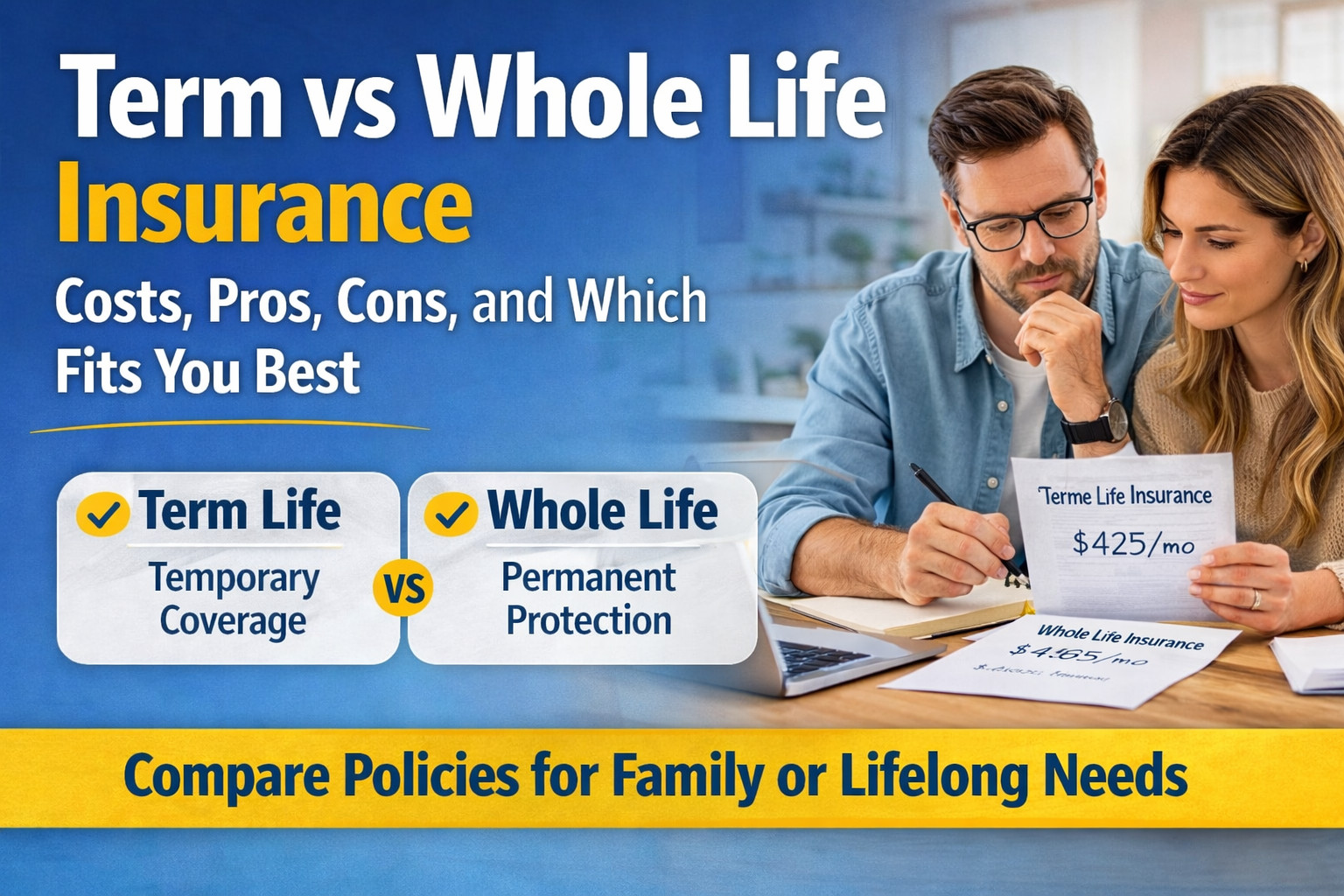
- Term life is usually best for affordable temporary coverage.
- Whole life is usually best for lifelong protection and cash value.
- Term often fits parents, mortgages, income replacement, and business debt.
- Whole life often fits final expenses, legacy goals, and permanent planning.
- The right choice depends on the job you need the death benefit to do.

Scott Benton | Coach B. Insurance
Author: Scott Benton, Licensed Life Insurance Agent
Experience: Serving families since 1992
Phone: (800) 342-1537
Office: 10229 Hamlet Court, Union, KY 41091
Disclosure: Coach B. Insurance may be compensated if you purchase through our agency or referral partners. Quotes, premiums, approvals, underwriting, cash value projections, riders, conversion options, policy guarantees, exclusions, and availability vary by carrier, state, age, health, tobacco use, product type, and coverage amount.
Term vs Whole Life Insurance: Quick Side-by-Side Comparison
The fastest way to understand the difference is to compare what each policy is designed to do. Term life is temporary protection. Whole life is permanent coverage with cash value.
| Category | Term Life Insurance | Whole Life Insurance |
|---|---|---|
| Coverage length | Temporary, commonly 10, 15, 20, 25, 30, or sometimes 40 years. | Permanent, designed to last for life if premiums are paid and policy terms are followed. |
| Cost | Usually much lower for the same death benefit. | Usually much higher because it provides lifetime coverage and cash value. |
| Cash value | Usually no cash value. | Builds cash value over time. |
| Main use | Income replacement, mortgage protection, family protection, and temporary debts. | Permanent protection, final expenses, legacy planning, and long-term guarantees. |
| Best known for | Affordability and larger coverage amounts. | Lifetime coverage, fixed structure, and cash value. |
| Common mistake | Buying a term too short or too small for the real risk. | Buying whole life for a temporary need when the premium strains the budget. |
What Term Life Insurance Is Really For
Term life insurance is usually the strongest fit when the financial problem has an end date. It is built for a set number of years and is often used when a family needs a large death benefit at an affordable monthly cost.
Income replacement
Helps replace a paycheck while your spouse, children, or family still depend on your income.
Mortgage protection
Can be matched to a mortgage timeline so your family has money to keep the home.
Family protection
Often gives parents more coverage for less money during the child-raising years.
Temporary obligations
Fits debts, business loans, child support windows, college years, or working-year risks.
Explore Term Life Insurance →
What Whole Life Insurance Is Really For
Whole life insurance is usually for buyers who want a policy designed to stay in force for life, not just for a temporary period. It can make sense when the need is permanent and the premium fits comfortably in the budget.
Lifetime coverage
Designed to provide coverage for life if premiums are paid and policy terms are followed.
Cash value
Builds cash value over time, which is one reason premiums are higher than term.
Final expenses
Can help cover funeral, burial, cremation, medical bills, and final bills.
Legacy planning
May fit buyers who want guaranteed long-term protection or money left to heirs.
Explore Whole Life Insurance →
The Biggest Difference: Cost vs Permanence
The biggest difference between term and whole life is not just price. It is what the price is buying. Term usually buys more temporary death benefit per dollar. Whole life buys permanent coverage and cash value at a higher premium.
| Question | Term Life Answer | Whole Life Answer |
|---|---|---|
| Do I need the most death benefit for the lowest monthly cost? | Usually yes. | Usually no. |
| Do I need coverage to last forever? | No. Coverage ends after the term unless renewed, converted, or replaced. | Yes. It is designed to last for life. |
| Do I want cash value? | Usually no cash value. | Yes, cash value is part of the policy design. |
| Do I need to protect kids, income, or a mortgage? | Often a strong fit. | May be too expensive for the amount needed. |
| Do I need final expense or legacy coverage? | May not last long enough. | Often a stronger fit if the premium is affordable. |
Term vs Whole Life by Real-Life Situation
Instead of asking which policy is better, ask which one is better for your situation.
| Your Situation | Usually Better Starting Point | Why |
|---|---|---|
| Young family with children | Term life | Usually provides larger coverage for income replacement and childcare at a lower initial cost. |
| Mortgage protection | Term life | The term can be matched to the remaining mortgage timeline. |
| Single parent | Term life | Often needs the most affordable way to create meaningful coverage for children. |
| Final expense planning | Whole life or final expense | The need may exist for life, not just for 20 or 30 years. |
| Legacy planning | Whole life | Permanent coverage may fit buyers who want a guaranteed death benefit for heirs. |
| Business loan protection | Term life | The policy can often be matched to the loan or obligation timeline. |
| Special needs planning | Permanent coverage may be needed | The financial need may not disappear when a term expires. |
| Budget is tight | Term life | A policy you can afford and keep is usually better than a permanent policy that strains the budget. |
Choose Term Life When...
Term life may be a strong fit if...
- you need the largest death benefit for the lowest initial cost
- your main goal is income replacement
- you have children who depend on your income
- you have a mortgage or major debt
- your financial obligation will likely end in 10 to 30 years
- you want simple coverage for a temporary risk
Term life may not be best if...
- you need lifelong coverage
- you want guaranteed cash value
- you are planning for final expenses late in life
- you want coverage that does not expire
- you need permanent estate or legacy planning
- you may not be insurable when the term ends
Choose Whole Life When...
Whole life may be a strong fit if...
- you want coverage designed to last for life
- you want fixed premiums and long-term structure
- you want cash value as part of the policy
- you need final expense or burial coverage
- you want to leave a guaranteed legacy
- you can comfortably afford the higher premium
Whole life may not be best if...
- your main need is temporary income replacement
- you need a large amount of coverage on a tight budget
- you are mainly protecting a mortgage
- you do not understand the cash value design
- you may not keep the policy long term
- the premium would crowd out other financial priorities
What Cash Value Really Means
Cash value is one of the biggest reasons people consider whole life insurance. It can become part of the policy’s long-term value, and it may be accessible through loans or withdrawals depending on the policy terms.
But cash value is not free money. It exists inside a more expensive policy design. If your only goal is protecting your family for the next 20 or 30 years, term life may be cleaner. If your goal is permanent protection with long-term policy value, whole life may deserve a closer look.
| Cash Value Question | Practical Answer |
|---|---|
| Does term life build cash value? | Traditional term life usually does not build cash value. |
| Does whole life build cash value? | Yes, whole life is designed to build cash value over time. |
| Can I borrow from cash value? | Policy loans may be available, but loans can reduce the death benefit and may create problems if not managed properly. |
| Should I buy whole life only for cash value? | Usually no. The policy should first make sense as life insurance and permanent protection. |
Can Term Life Become Whole Life Later?
Sometimes. Many term life policies include a conversion option that may let you convert part or all of the term policy to permanent coverage during an allowed conversion window without new medical underwriting.
Conversion can be valuable if your health changes and you still need permanent coverage later. But it is not a free upgrade. If you convert, the new permanent policy premium is usually much higher because whole life costs more and you are older at the time of conversion.
Why conversion matters
It may preserve the option to move into permanent coverage later without proving insurability again.
Why conversion costs more
You are moving from temporary coverage into a permanent policy design.
When to review it
Before buying term life, check the conversion rules, deadline, and available permanent options.
What Each Type Usually Does Better
Term life usually does better with...
- lower initial premiums
- larger coverage amounts for working families
- income replacement
- mortgage protection
- business loan protection
- temporary financial obligations
Whole life usually does better with...
- lifelong protection
- fixed long-term structure
- cash value accumulation
- final expense planning
- legacy planning
- permanent financial needs
Alternatives to Compare Before Choosing
Sometimes the answer is not plain term or plain whole life. Depending on your goal, another life insurance design may fit better.
| Alternative | Best For | Why to Compare It |
|---|---|---|
| Guaranteed Universal Life | Permanent death benefit with less focus on cash value. | May fit shoppers who want lifelong coverage but do not need traditional whole life cash value. |
| Universal Life | Flexible permanent coverage. | May offer more flexibility than whole life, but policy management matters. |
| Final Expense Insurance | Smaller permanent coverage for funeral, burial, cremation, and final bills. | May be more appropriate than large whole life for senior final-bill planning. |
| No Medical Exam Life Insurance | Fast coverage without a traditional physical exam. | May fit shoppers who value speed and convenience. |
How to Decide Between Term and Whole Life
Use this simple decision process before you compare quotes.
Define the need
Decide whether the need is temporary, permanent, or a mix of both.
Choose the amount
Estimate income replacement, mortgage, debts, final expenses, and legacy goals.
Check the budget
Make sure the premium is realistic enough to keep the policy in force.
Compare quotes
Compare term, whole life, and alternatives based on the actual job of the policy.
Common Mistakes People Make in the Term vs Whole Life Debate
- Choosing only by monthly premium.
- Buying whole life for a temporary need and straining the budget.
- Buying term life for a clearly permanent need.
- Not comparing conversion options before buying term.
- Assuming cash value means whole life is automatically better.
- Forgetting that term coverage can expire before death.
- Buying too little term coverage because the smaller quote looks easier.
- Not comparing guaranteed universal life or final expense when appropriate.
Best Next Page Based on Your Goal
Need permanent coverage?
Review whole life before comparing permanent policies.
Whole Life Insurance →Need coverage amount help?
Use the calculator before choosing policy type.
Life Insurance Calculator →Need permanent alternatives?
Compare guaranteed universal life and whole life.
Compare Permanent Options →The Bottom Line
Term vs whole life insurance is not really a debate about which policy is better. It is a decision about which policy fits the job you need the death benefit to do.
Term life is usually better when the need is temporary and the budget matters. Whole life is usually better when the need is permanent and you want lifelong coverage, cash value, and long-term guarantees.
For many families, term life is the strongest starting point because it protects the biggest financial risks at a lower initial cost. For some buyers, whole life is worth the higher premium because the goal is different.
Helpful Related Pages
Term Life Insurance
Best next page if affordable family protection is likely your top priority.
Explore Term Life →Whole Life Insurance
Best next page if you want permanent coverage and cash value explained in more depth.
Explore Whole Life →Convertible Term Life Insurance
Best next page if you like term coverage now with permanent coverage flexibility later.
See Convertible Options →Life Insurance Calculator
Best next page if you still need to estimate how much coverage makes sense.
Use Calculator →Frequently Asked Questions
Which is better, term life or whole life insurance?
Neither is automatically better for everyone. Term life is usually better for affordable temporary protection, while whole life is usually better for permanent coverage, cash value, and lifelong planning.
Is whole life insurance more expensive than term life?
Yes, in most cases. Whole life usually costs much more because it is designed to last for life and includes a cash value component.
Does term life insurance build cash value?
Traditional term life insurance usually does not build cash value. It is designed mainly for death benefit protection during a specific period.
Can you convert term life to whole life?
Many term policies include a conversion option that may let you convert to permanent coverage later without new medical underwriting during the allowed conversion window.
Who should usually buy term life insurance?
Term life is often strongest for parents, homeowners, income earners, business owners, and families who want the most coverage for the lowest initial cost during a temporary need period.
Who should usually buy whole life insurance?
Whole life is often strongest for buyers who want lifelong protection, final expense coverage, cash value, fixed premiums, or permanent legacy planning.


