
Ancillary Insurance Products: Dental, Vision, Disability, Accident, Critical Illness & More
Ancillary insurance products are supplemental insurance solutions that help fill gaps left by primary health insurance or employer benefits. These products can include dental insurance, vision insurance, life insurance, disability insurance, accident insurance, critical illness insurance, hospital indemnity, hearing, wellness benefits, and more.
Coach B. Insurance helps individuals, families, employees, self-employed workers, and small businesses compare ancillary insurance products without pressure so they can choose practical protection that actually fits.
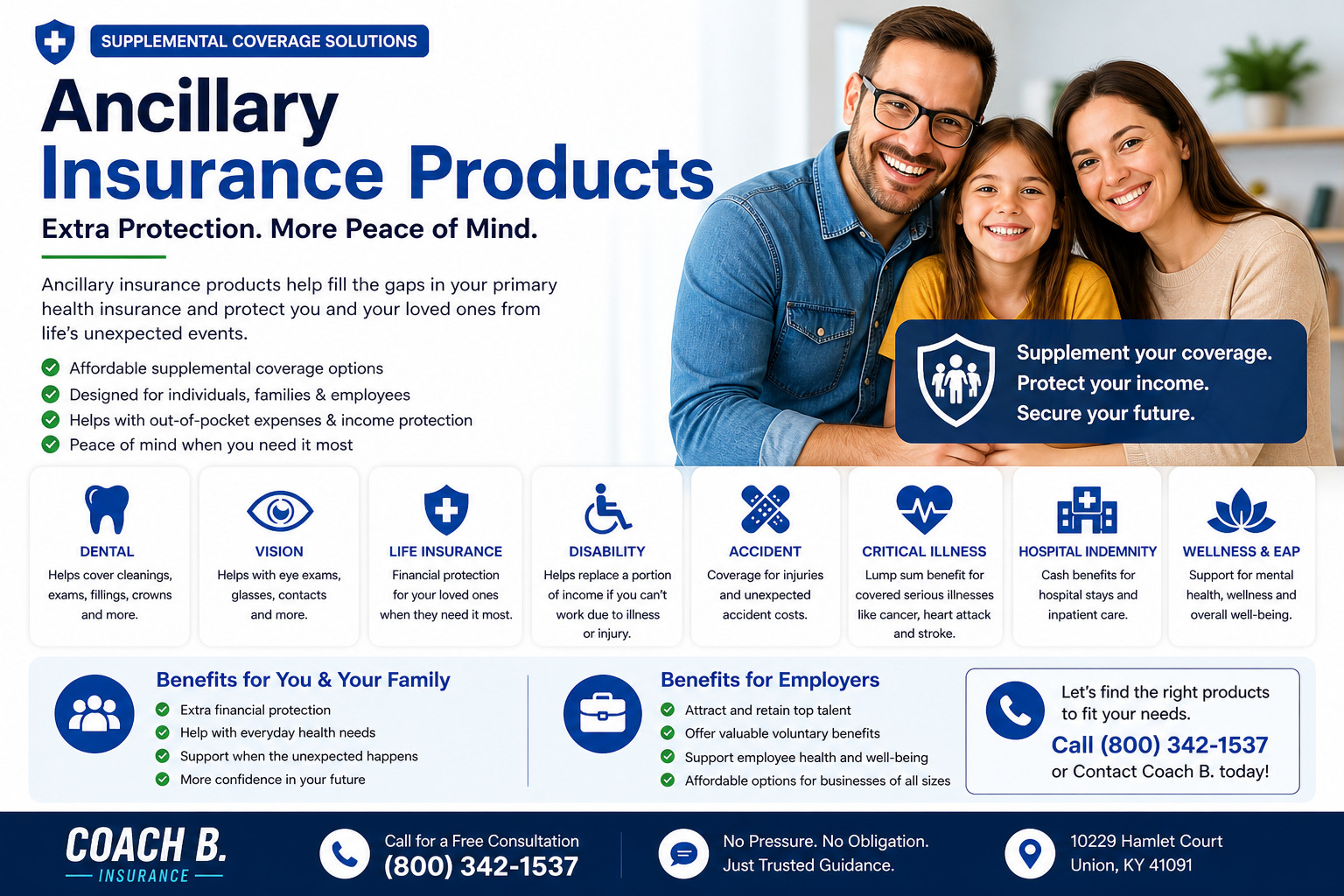
- Ancillary products supplement major medical or employee benefits.
- Common products include dental, vision, disability, life, accident and critical illness.
- Some products protect health needs, others protect income or family finances.
- Employers may offer products as voluntary, employer-paid or shared-cost benefits.
- The best product mix depends on your personal or workforce coverage gaps.

Scott Benton | Coach B. Insurance
Author: Scott Benton, Licensed Life Insurance Agent
Experience: Serving families since 1992
Phone: (800) 342-1537
Office: 10229 Hamlet Court, Union, KY 41091
Disclosure: Coach B. Insurance may be compensated if you purchase through our agency or referral partners. Product availability, exclusions, waiting periods, underwriting, pricing and carrier terms vary.
What Are Ancillary Insurance Products?
Ancillary insurance products are individual or group insurance products designed to supplement your main health insurance or employee benefits package. They are often used to strengthen coverage in areas where standard health insurance may not fully protect you, such as dental care, vision care, income loss, accidents, hospitalization, or family financial protection.
Some ancillary products focus on routine needs, like dental or vision. Others focus on bigger financial risks, like disability income, life insurance, critical illness, or hospital indemnity.
Health-Focused Products
Dental, vision, hearing, wellness and preventive products support day-to-day health needs.
Income-Focused Products
Disability and accident products may help reduce financial strain when illness or injury affects work.
Family Protection Products
Life insurance and critical illness products can help protect families from larger financial disruptions.
Most Common Ancillary Insurance Products
Dental Insurance
May help with exams, cleanings, fillings, crowns, dentures and other covered dental care.
Vision Insurance
May help with eye exams, glasses, contacts, frames and other covered vision services.
Life Insurance
Provides death benefit protection for loved ones or beneficiaries.
Disability Insurance
Can help replace part of your income if illness or injury affects your ability to work.
Accident Insurance
May help with covered accidental injuries, fractures or emergency-related costs.
Critical Illness Insurance
May provide benefits after covered diagnoses such as cancer, stroke or heart attack.
Hospital Indemnity
May help with covered hospitalization costs depending on plan structure.
Hearing / Wellness
May include hearing support, wellness tools, EAP programs or preventive care add-ons.
Ancillary Insurance Products Comparison Table
| Product | Main Purpose | Best For | Risk It May Help With |
|---|---|---|---|
| Dental Insurance | Oral health support | Families, individuals, employees | Routine and unexpected dental expenses |
| Vision Insurance | Eye care support | Glasses or contact wearers | Vision exams and corrective costs |
| Life Insurance | Family financial protection | Families, parents, business owners | Income loss after death |
| Disability Insurance | Income protection | Workers, self-employed | Lost income from illness or injury |
| Accident Insurance | Injury-related support | Active families, workers | Accidental injuries and related expenses |
| Critical Illness | Serious diagnosis support | Adults and families | Major illness-related financial strain |
| Hospital Indemnity | Hospital stay support | High-deductible plan users | Hospitalization costs |
Individual vs Employee Ancillary Products
Individual Products
- Purchased directly by individuals or families.
- More customization based on personal needs.
- Useful for self-employed or independent buyers.
- May continue regardless of employer changes.
Employer-Sponsored Products
- Often offered through workplace benefits.
- May include voluntary or employer-paid options.
- Convenient payroll deduction.
- May have portability limits when employment changes.
How to Choose the Right Ancillary Insurance Products
1. Identify Your Gap
Determine whether your biggest gap is health, income, family protection or hospital-related.
2. Review Product Limits
Check waiting periods, exclusions, benefit caps, portability and how benefits are paid.
3. Prioritize Value
Focus on products that match your real risk, not just products that are available.
Common Mistakes to Avoid
- Buying products you do not understand.
- Ignoring exclusions or waiting periods.
- Assuming employer benefits automatically transfer if you leave.
- Overlooking disability or income protection needs.
- Choosing products based only on lowest premium.
- Ignoring family or dependent needs.
- Not reviewing provider networks.
- Skipping annual benefits review.
The Bottom Line
Ancillary insurance products can strengthen financial protection when they match your real risks. Dental, vision, disability, life, accident, critical illness and hospital products each solve different problems.
The best ancillary strategy is not buying everything — it is choosing the right products for your life, family or workforce.
Helpful Related Pages
Ancillary Insurance
Main pillar page for ancillary insurance and supplemental coverage.
Explore Ancillary Insurance →Ancillary Benefits
Learn why ancillary benefits matter for employees and employers.
Explore Benefits →Health Insurance
Understand how ancillary products fit around primary health insurance.
Explore Health Insurance →Frequently Asked Questions
What are ancillary insurance products?
Ancillary insurance products are supplemental insurance products such as dental, vision, life, disability, accident, critical illness and hospital indemnity that support your broader coverage strategy.
What are examples of ancillary products?
Examples include dental insurance, vision insurance, life insurance, disability insurance, accident insurance, critical illness insurance and hospital indemnity.
Are ancillary products worth it?
They may be worth it when they fill a real protection gap and fit your budget, lifestyle or workforce needs.
Can small businesses offer ancillary insurance products?
Yes. Many small businesses may offer voluntary, employer-paid or shared-cost ancillary products depending on plan design and carrier options.
What ancillary product should I start with?
That depends on your biggest gap. Many people start with dental, vision, life or disability, but the right choice depends on your actual needs.


