
Ancillary Insurance Benefits: Dental, Vision, Disability, Accident, Critical Illness and More
Ancillary insurance benefits are supplemental coverage options that work alongside your primary health insurance or employee benefits package. They can help with dental care, vision needs, disability income, accident costs, critical illness expenses, hospital stays, life insurance, and other gaps that major medical insurance may not fully cover.
Coach B. Insurance helps individuals, families, employees, self-employed workers, and small business owners compare ancillary benefits without pressure so they can choose coverage that actually fits their needs and budget.
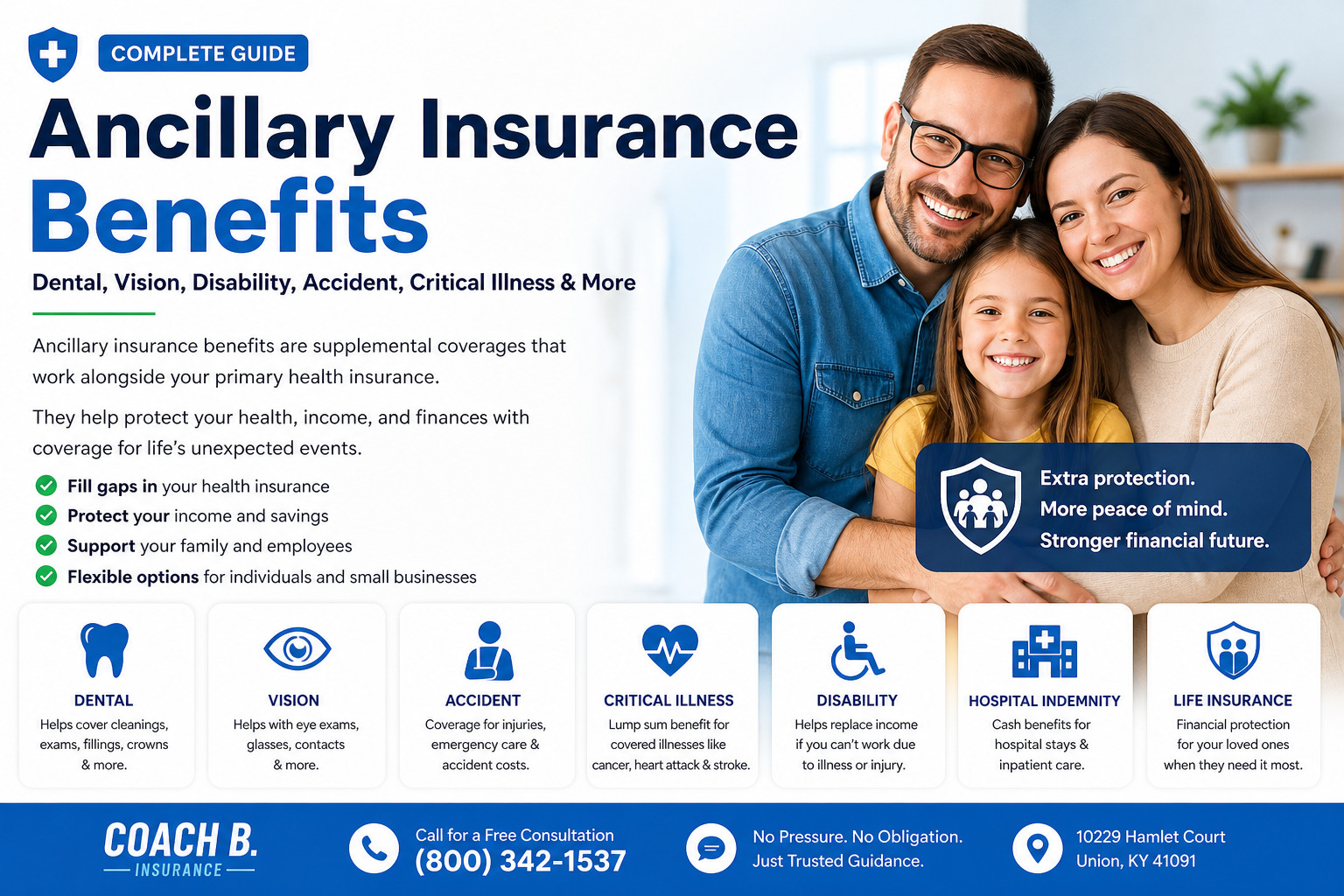
- Ancillary benefits supplement primary health insurance.
- Common examples include dental, vision, life, disability, accident, and critical illness insurance.
- Plans may be individual, voluntary, employer-paid, or cost-shared.
- Small businesses can use ancillary benefits to improve recruiting and retention.
- The right plan depends on coverage gaps, budget, family needs, and benefit limits.

Scott Benton | Coach B. Insurance
Author: Scott Benton, Licensed Life Insurance Agent
Experience: Serving families since 1992
Phone: (800) 342-1537
Office: 10229 Hamlet Court, Union, KY 41091
Disclosure: Coach B. Insurance may be compensated if you purchase through our agency or referral partners. Coverage availability, benefits, exclusions, waiting periods, pricing, and underwriting rules vary by carrier, state, age, health, plan type, and eligibility.
What Are Ancillary Insurance Benefits?
Ancillary insurance benefits are extra insurance products that support your main health insurance or employee benefits package. They are usually not meant to replace major medical coverage. Instead, they help with specific needs such as dental care, vision care, income protection, accident expenses, hospital stays, or a serious diagnosis.
Think of major medical insurance as the foundation. Ancillary benefits are the add-on protections that help with the parts of life that health insurance may not fully handle — like a broken tooth, new glasses, time away from work, a hospital stay, or out-of-pocket costs after a covered illness.
For Individuals
Ancillary benefits can help fill personal coverage gaps, especially for dental, vision, accident, disability, or critical illness needs.
For Families
Families often use ancillary coverage to help manage predictable needs like dental and vision care, plus unexpected costs from accidents or illness.
For Small Businesses
Employers can use ancillary benefits to build a stronger benefits package without always changing the main health insurance plan.
Core Health Insurance vs Ancillary Benefits
| Coverage Type | Primary Purpose | Examples | How It Usually Helps |
|---|---|---|---|
| Core Health Insurance | Major medical care | HMO, PPO, EPO, POS, HDHP | Helps pay for doctor visits, hospitals, surgeries, prescriptions, preventive care, and covered medical treatment. |
| Ancillary Benefits | Supplemental coverage gaps | Dental, vision, accident, disability, life, critical illness, hospital indemnity | Helps with specific expenses, income gaps, or services not fully covered by major medical insurance. |
| Voluntary Benefits | Employee-selected add-ons | Accident, critical illness, hospital, dental, vision, life | Employees may choose and pay for coverage through payroll deduction, depending on employer setup. |
Most Common Ancillary Insurance Products
Dental Insurance
May help with cleanings, exams, fillings, extractions, crowns, dentures, and other covered dental services.
Vision Insurance
May help with eye exams, lenses, frames, contacts, and other covered vision services.
Life Insurance
Can provide a death benefit for beneficiaries and is often included in employee benefit packages.
Disability Insurance
Can help replace part of your income if a covered illness or injury prevents you from working.
Accident Insurance
May pay benefits for covered accidental injuries, emergency care, fractures, or accident-related costs.
Critical Illness Insurance
May pay a benefit after covered diagnoses such as cancer, heart attack, stroke, or other serious conditions.
Hospital Indemnity
May pay benefits for covered hospital admission, confinement, or inpatient care, depending on policy terms.
Hearing and Wellness
May help with hearing exams, hearing aids, wellness programs, or other supportive employee benefits.
Voluntary vs Employer-Paid Ancillary Benefits
Ancillary benefits can be offered in different ways. Some are paid fully by employees, some are shared between the employer and employee, and some are fully employer-paid. The right structure depends on the company’s budget, employee needs, participation goals, and benefit strategy.
| Benefit Structure | Who Pays? | Best For | Example |
|---|---|---|---|
| Voluntary Benefits | Usually the employee | Businesses that want to offer more choices without paying the full cost. | Employee chooses accident, critical illness, dental, or vision coverage through payroll deduction. |
| Contributory Benefits | Employer and employee share cost | Employers who want to support employees while managing benefit costs. | Employer pays part of dental or disability premiums; employee pays the rest. |
| Employer-Paid Benefits | Employer pays all or most | Companies using benefits as a stronger recruiting and retention tool. | Employer-paid group life insurance or short-term disability coverage. |
Why Ancillary Benefits Matter
Lower Out-of-Pocket Risk
Ancillary benefits may help with costs that can still show up even when you already have health insurance.
Family Protection
Families often value dental, vision, life, accident, and critical illness coverage because those needs can come up quickly.
Employee Retention
Small businesses can use ancillary benefits to make a benefits package feel more complete and competitive.
Financial Flexibility
Some plans pay benefits directly to the insured, which may allow flexibility for bills, travel, childcare, or household expenses.
Recruiting Advantage
A strong benefits menu can help small businesses compete for employees even when they cannot match large-company compensation packages.
Coverage Customization
Ancillary benefits let individuals, families, and employers choose add-ons based on real needs instead of relying on one generic package.
Ancillary Benefits for Small Business Owners
For small business owners, ancillary benefits can be a practical way to strengthen an employee benefits package. They can help employees feel more protected while giving the business more flexibility in plan design, contribution levels, and benefit choices.
Why Businesses Offer Them
- Improve recruiting and retention.
- Offer benefits beyond basic medical coverage.
- Give employees more choice.
- Support dental, vision, disability, life, and supplemental health needs.
What to Compare
- Employer-paid vs voluntary structure.
- Participation requirements.
- Payroll deduction options.
- Carrier reputation, claims process, and employee support.
How to Choose the Right Ancillary Insurance Plan
1. Find the Real Gap
Start with what your current coverage does not handle well: dental, vision, income loss, hospital costs, deductibles, or family protection.
2. Compare Benefits and Limits
Review benefit amounts, waiting periods, exclusions, networks, annual maximums, and whether the policy pays you or the provider.
3. Match the Plan to the Person
A family with kids, a self-employed worker, and a business with employees may each need a different ancillary benefits strategy.
Common Mistakes to Avoid
- Buying a plan without checking waiting periods.
- Assuming every dentist, eye doctor, or provider is in network.
- Ignoring annual maximums, exclusions, or benefit caps.
- Confusing ancillary coverage with major medical insurance.
- Choosing the cheapest plan without reviewing benefits.
- Not checking how claims are paid.
- Overlooking portability if you leave a job.
- Offering employee benefits without explaining how they actually work.
The Bottom Line
Ancillary insurance benefits can be valuable when they fill a real gap. Dental, vision, life, disability, accident, critical illness, hospital indemnity, and other supplemental benefits can help individuals, families, employees, and small businesses build better protection.
The key is not buying every add-on. The key is choosing the benefits that match your actual risk, budget, family needs, employee needs, and coverage gaps.
Helpful Related Pages
Health Insurance
Start here if you want to understand primary health insurance before choosing add-on benefits.
Explore Health Insurance →Ancillary Benefits
Best next page if you want the employee-benefits angle of supplemental coverage.
Explore Ancillary Benefits →Ancillary Products
Best page if you want more examples of add-on insurance products and how they work.
Explore Ancillary Products →Contact Coach B
Best next step if you want help deciding which coverage fits your needs.
Contact Coach B →Frequently Asked Questions
What are ancillary insurance benefits?
Ancillary insurance benefits are supplemental insurance products that work alongside primary health insurance or employee benefits. Examples include dental, vision, life, disability, accident, critical illness, and hospital indemnity coverage.
Is dental insurance an ancillary benefit?
Yes. Dental insurance is one of the most common ancillary benefits because it helps cover services that major medical insurance usually does not fully cover.
Is life insurance considered an ancillary benefit?
Yes. Group life insurance or supplemental life insurance may be considered an ancillary benefit when offered as part of an employee benefits package.
What is voluntary ancillary insurance?
Voluntary ancillary insurance is optional coverage that employees can choose, often paid through payroll deduction. Examples may include accident, critical illness, dental, vision, hospital indemnity, or supplemental life coverage.
Are ancillary benefits worth it?
Ancillary benefits may be worth it when they address a real coverage gap, fit your budget, and provide benefits you are likely to use or value during a covered event.
What is hospital indemnity insurance?
Hospital indemnity insurance is supplemental coverage that may pay benefits for covered hospital admission, confinement, or inpatient care, depending on policy terms and limits.
Can self-employed people buy ancillary insurance?
Yes. Self-employed people may be able to buy individual dental, vision, accident, disability, critical illness, hospital indemnity, or life insurance depending on availability and eligibility.
What is ancillary insurance for small business?
Ancillary insurance for small business usually refers to add-on employee benefits such as dental, vision, group life, disability, accident, critical illness, and hospital indemnity coverage.
Is ancillary insurance tax deductible?
Tax treatment depends on the type of coverage, who pays the premium, how the plan is structured, and current tax rules. Ask a qualified tax professional before making tax decisions.
What is the difference between supplemental and ancillary insurance?
The terms often overlap. Supplemental insurance generally adds extra financial protection, while ancillary benefits often refer to add-on benefits such as dental, vision, life, disability, accident, and other coverage offered alongside health insurance or employee benefits.


