
Best Ancillary Insurance Providers: How to Choose the Right Carrier, Broker or Benefits Partner
The best ancillary insurance provider is not always the cheapest company. The right provider depends on product selection, claims experience, network quality, enrollment support, portability, pricing, and how well the coverage fits your family, employees, or small business.
Coach B. Insurance helps individuals, families, self-employed workers, and business owners compare ancillary insurance providers for dental, vision, life, disability, accident, critical illness, hospital indemnity, and voluntary benefits.
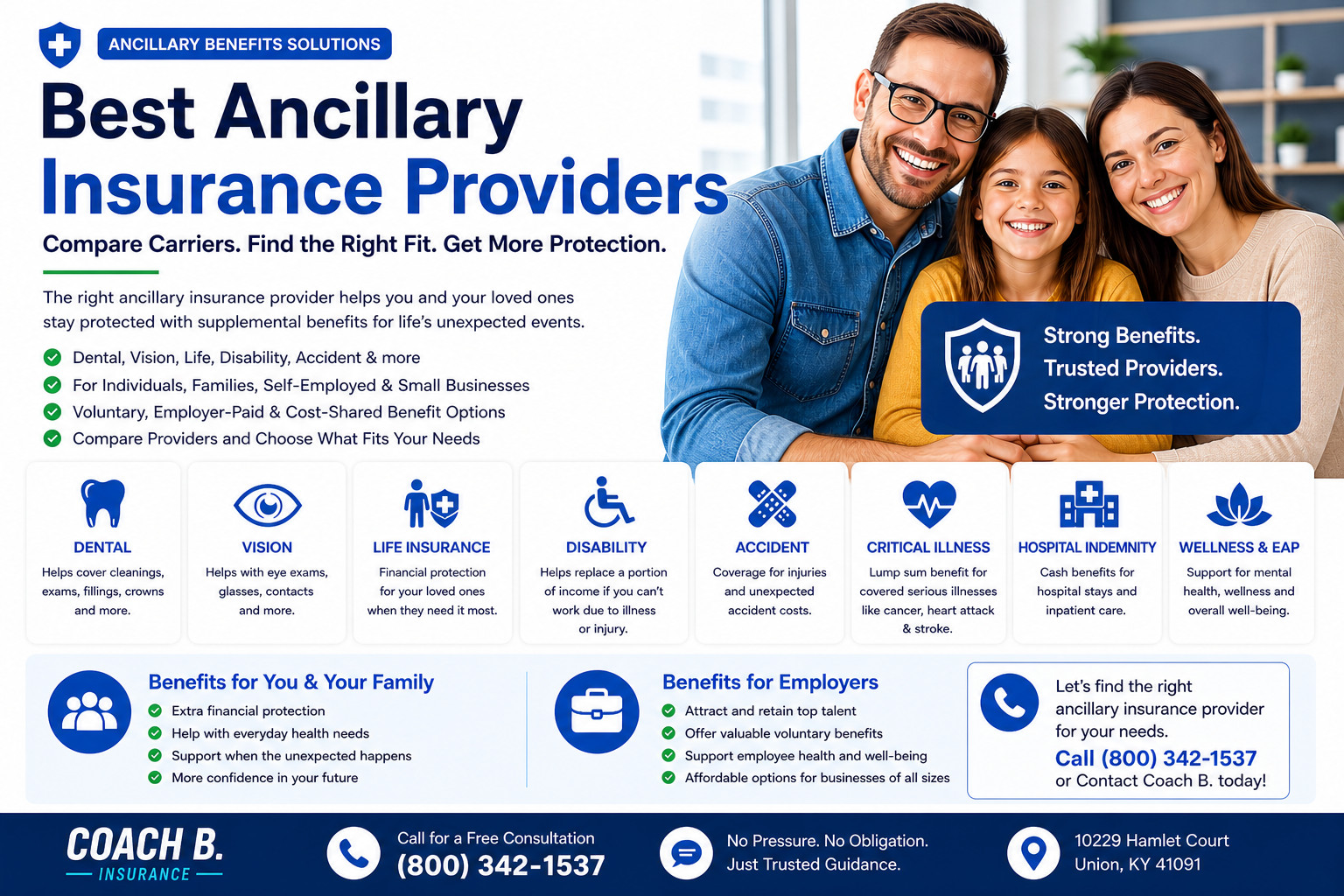
- Ancillary providers include insurance carriers, brokers, agencies, and benefit platforms.
- The best provider depends on product range, pricing, claims, networks, and service.
- Dental, vision, life, disability, accident, and critical illness are common products.
- Small businesses should compare voluntary, employer-paid, and cost-shared options.
- A broker can help compare multiple providers instead of only one company.

Scott Benton | Coach B. Insurance
Author: Scott Benton, Licensed Life Insurance Agent
Experience: Serving families since 1992
Phone: (800) 342-1537
Office: 10229 Hamlet Court, Union, KY 41091
Disclosure: Coach B. Insurance may be compensated if you purchase through our agency or referral partners. Provider availability, coverage, pricing, exclusions, waiting periods, claims rules, networks, and underwriting vary by carrier, state, plan type, and eligibility.
What Is an Ancillary Insurance Provider?
An ancillary insurance provider is a company, broker, agency, or benefits partner that helps offer supplemental insurance products alongside primary health insurance or employee benefits. These products may include dental, vision, life insurance, disability insurance, accident insurance, critical illness insurance, hospital indemnity, hearing coverage, wellness benefits, and voluntary employee benefits.
The word “provider” can mean different things. Sometimes it means the insurance carrier that issues the policy. Sometimes it means the broker who helps compare companies. Sometimes it means the benefits platform that handles enrollment, payroll deductions, and employee administration.
Insurance Carriers
These are the companies that issue the policy, define benefits, collect premiums, and handle claims.
Brokers and Agencies
A broker or agency helps compare multiple ancillary insurance companies instead of limiting you to one carrier.
Benefits Platforms
These help employers manage enrollment, employee education, payroll deductions, and benefit administration.
Carrier vs Broker vs Benefits Platform
| Provider Type | Best For | Pros | Possible Limits |
|---|---|---|---|
| Insurance Carrier | People who already know the company and product they want. | Direct product access, established claims process, carrier-specific details. | Usually limited to that company’s own products. |
| Broker or Agency | Individuals, families, and businesses that want help comparing multiple providers. | More options, personalized guidance, help matching carrier appetite to need. | Available carriers may vary by agency, state, and product type. |
| Benefits Platform | Employers that need enrollment, payroll, administration, and employee support. | Streamlined employee enrollment and administration. | May focus more on administration than personalized insurance guidance. |
What Makes a Good Ancillary Insurance Provider?
Product Selection
Look for dental, vision, life, disability, accident, critical illness, hospital, and voluntary benefit options.
Claims Experience
A good provider should make claims clear, timely, and understandable.
Network Quality
Dental and vision plans often depend heavily on provider networks and access.
Pricing
Compare premiums, benefit levels, waiting periods, and out-of-pocket exposure.
Portability
Some products may be portable if you leave a job, while others may not be.
Enrollment Simplicity
Small businesses should look for simple enrollment and clear employee communication.
Voluntary Options
Voluntary benefits can give employees more choice without requiring full employer funding.
Broker Support
A good broker helps explain tradeoffs instead of just showing price sheets.
Best Ancillary Insurance Providers by Product Type
| Product Type | What to Look For | Best For |
|---|---|---|
| Dental Providers | Strong dentist network, preventive coverage, reasonable annual maximums, clear waiting periods. | Families, employees, and people with recurring dental needs. |
| Vision Providers | Eye exam benefits, frame/contact allowance, easy retail and provider access. | People who wear glasses, contacts, or need regular eye exams. |
| Life Insurance Providers | Clear death benefit, conversion options, group or individual coverage choices. | Families, employees, and business owners. |
| Disability Providers | Income replacement percentage, benefit period, elimination period, occupation definitions. | Workers, self-employed people, and income-dependent households. |
| Accident Providers | Covered injury schedule, emergency benefits, fracture/dislocation benefits, claim simplicity. | Active families, workers, and people with high-deductible health plans. |
| Critical Illness Providers | Covered conditions, lump-sum benefit options, recurrence rules, exclusions. | People concerned about cancer, heart attack, stroke, or serious illness costs. |
| Hospital Indemnity Providers | Admission benefits, daily confinement benefits, ICU benefits, plan limits. | People worried about hospital-related out-of-pocket costs. |
Best Ancillary Providers for Small Business
Small businesses often need ancillary providers that are flexible, simple to administer, and easy for employees to understand. The right provider should support voluntary benefits, employer-paid benefits, or cost-shared benefits depending on the company’s budget and goals.
Voluntary Benefits
Employees choose optional coverage and usually pay through payroll deduction.
Employer-Paid Benefits
The employer pays for all or most of the benefit as a stronger recruiting and retention tool.
Cost-Shared Benefits
The employer and employees share the cost to balance value and budget control.
How to Compare Ancillary Insurance Providers
1. Start With the Need
Are you trying to solve dental, vision, income protection, accident, illness, hospital, life insurance, or employee retention needs?
2. Compare More Than Price
Look at networks, claims, waiting periods, benefit caps, exclusions, portability, and administration support.
3. Use a Broker When Needed
A broker can help compare providers and explain which products match your situation instead of forcing one solution.
Common Mistakes to Avoid
- Choosing a provider based only on premium.
- Ignoring dental or vision provider networks.
- Not reviewing waiting periods or exclusions.
- Assuming every product is portable after employment ends.
- Offering employee benefits without explaining how they work.
- Not comparing carrier claims reputation.
- Overlooking disability or income protection.
- Failing to review plans each year as needs change.
The Bottom Line
The best ancillary insurance provider depends on your goals. A family may need dental, vision, accident, and life insurance. A self-employed person may prioritize disability income. A small business may need voluntary benefits, payroll-friendly enrollment, and employee education.
Coach B. Insurance can help you compare ancillary providers, understand your options, and choose coverage that fits your needs without pressure.
Helpful Related Pages
Ancillary Insurance
Main guide to ancillary insurance and supplemental coverage.
Explore Ancillary Insurance →Ancillary Benefits
Learn why ancillary benefits matter for employees, families, and small businesses.
Explore Benefits →Ancillary Products
Compare product types like dental, vision, disability, accident, and critical illness.
Explore Products →Frequently Asked Questions
What is an ancillary provider?
An ancillary provider is a carrier, broker, agency, or benefits partner that helps offer supplemental insurance products such as dental, vision, disability, accident, life, critical illness, and hospital indemnity.
What does an ancillary insurance company do?
An ancillary insurance company issues supplemental policies, defines benefits, collects premiums, and handles claims according to the policy terms.
What is the best ancillary insurance provider?
The best provider depends on your needs, budget, product type, network access, claims experience, portability, and whether you need individual, family, or employer-sponsored coverage.
Should I use a broker for ancillary insurance?
A broker may help when you want to compare multiple carriers, understand product differences, and choose coverage based on your actual needs instead of one company’s offer.
What ancillary provider is best for small business?
Small businesses should look for providers with flexible voluntary benefits, simple enrollment, good employee education, payroll compatibility, and useful products like dental, vision, life, disability, and accident coverage.
Are ancillary providers expensive?
Costs vary by product, benefit level, carrier, age, group size, underwriting, and contribution structure. Some voluntary benefits may be employee-paid through payroll deduction.
Can self-employed people buy ancillary insurance?
Yes. Self-employed people may be able to buy individual ancillary products such as dental, vision, disability, accident, critical illness, hospital indemnity, or life insurance.
How do I compare ancillary providers?
Compare product selection, pricing, claims process, networks, benefit limits, waiting periods, exclusions, portability, enrollment support, and service quality.


