
Convertible Term Life Insurance: How It Works, Costs, and When It Makes Sense
Convertible term life insurance can be valuable when you want affordable term coverage now with the option to switch to permanent life insurance later without starting over medically.
That is why this page matters. Buyers searching for convertible term life insurance are usually not just shopping for a cheap term policy. They are trying to protect future flexibility in case their health changes, their goals shift, or they decide they need lifelong coverage later on.
This guide breaks down how convertible term life insurance works, what a conversion privilege actually means, when converting can make sense, and when buying a different policy from the start may be the better move instead.
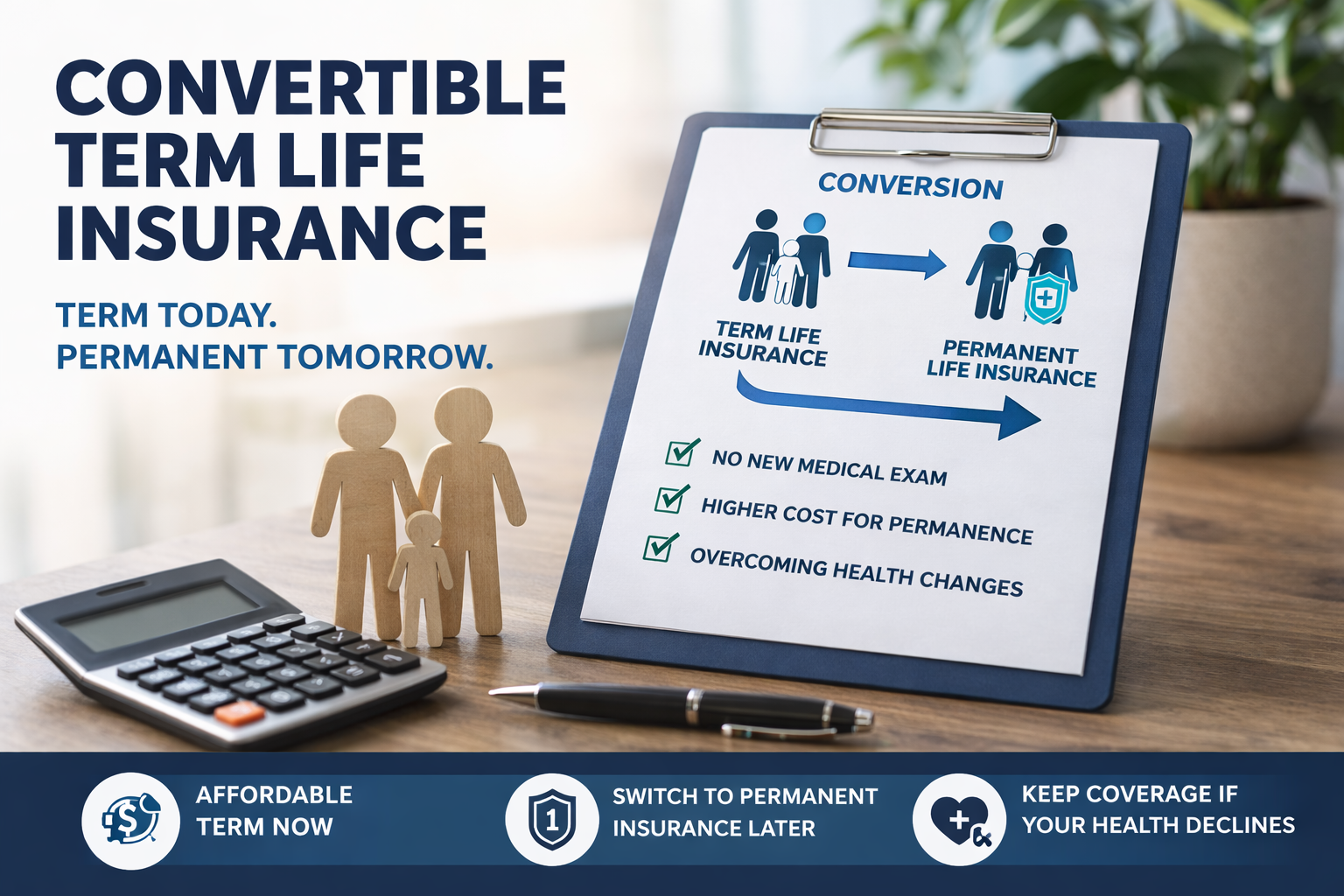
Convertible term life insurance means your term policy may let you switch to permanent coverage during a defined conversion window, usually without taking a new medical exam. That flexibility can be valuable, but permanent coverage will usually cost more than term.
- Convertible = you may switch to permanent coverage
- Conversion often avoids a new medical exam
- Permanent insurance usually costs much more
- The value is flexibility, not lower long-term cost

Scott Benton (a.k.a. Coach B.)
Author: Scott Benton, Licensed Life Insurance Agent
Experience: Serving families since 1992
Disclosure: Coach B. Insurance may be compensated if you purchase through our agency. Recommendations are based on product fit, underwriting, clarity, and usefulness — not pressure.
Editorial note: Conversion rules vary by carrier and contract. The deadline to convert, the permanent products available, and the pricing after conversion can differ meaningfully from one company to another.
What Convertible Term Life Insurance Is Really For
Convertible term life insurance is usually not about getting the absolute cheapest policy.
It is usually about protecting future options while still keeping today’s cost lower than permanent coverage.
Common reasons people value convertibility include:
- they want affordable term coverage now
- they may want permanent coverage later
- they are worried their health could change over time
- they want flexibility without committing to whole life or universal life today
How Convertible Term Life Insurance Works
These are broad planning concepts. Always check the actual policy for conversion deadlines, permanent product options, and contract limitations.
The #1 Thing to Check First: Your Conversion Deadline
Convertible term life insurance only helps if you use the option before it expires.
Many policies do not let you convert forever. The most common limits are:
Policy-year deadline
Some policies only allow conversion during a specific part of the term, such as within the first several policy years.
Age deadline
Some policies also stop conversion at a certain age, even if the term itself has not ended yet.
If you are even thinking about converting, check your deadline now. Missing it can mean losing the no-new-exam conversion option and having to apply again from scratch.
Partial conversion can be the smartest move
You do not always have to convert the full term policy.
In many cases, converting a smaller piece into permanent coverage while keeping the rest as term can be the best balance between lifetime protection and affordability.
Simple example
If you have a $500,000 term policy, you might convert $150,000 into whole life for lifelong base coverage and keep the remaining $350,000 as term while your larger temporary needs still exist.
Questions to ask before you convert
- What is my exact conversion deadline by date and age?
- Can I do a partial conversion, and is there a minimum amount?
- What permanent products can I convert into?
- Will my conversion avoid a new medical exam or new evidence of insurability?
- What would the premium be for a full conversion?
- What would the premium be for a few partial-conversion amounts?
Why Convertible Term Can Be Valuable
Health protection
If your health worsens later, the ability to convert without a new exam can be extremely valuable.
Future flexibility
You do not have to decide on permanent coverage on day one just to preserve the option.
Temporary to permanent bridge
Some buyers use convertible term as a bridge while they sort out long-term financial goals.
Partial conversion options
Some policies let you convert only part of the death benefit, which can help manage long-term cost.
When Convertible Term Life Insurance Can Make Sense
You want lower cost now but options later
Convertible term can let you buy affordable protection now without closing the door on permanent coverage later.
You are concerned your health could change
If you worry you may not qualify as easily later, conversion can help preserve a path to lifelong coverage.
You are not ready to commit to permanent insurance yet
Some buyers know they may want permanence later but are not ready to pay permanent-policy premiums now.
When It May Not Be the Best Fit
You only want the cheapest term coverage
If future conversion does not matter to you, a policy without this feature may price better.
You already know you need permanent coverage
If the need is lifelong today, starting with whole life or universal life may be more direct.
You may miss the conversion deadline
The value disappears if you wait beyond the allowed conversion period and lose the privilege.
Convertible Term vs Other Options
How to Decide Whether Convertibility Is Worth Having
Convertible term may be worth it if you want:
- lower term cost now
- a backup path to permanent insurance
- protection against future health changes
- flexibility while your long-term plans are still evolving
A different option may be better if you want:
- the absolute cheapest term premium
- permanent coverage from day one
- less product complexity
- a policy feature you know you will actually use soon
Common Mistakes People Make With Convertible Term Life Insurance
Assuming conversion is free
The exam may be avoided, but the new permanent premium will still be much higher than term.
Missing the conversion window
Many policies only allow conversion during a limited period, not forever.
Not asking what permanent products are available
Some carriers limit what you can convert into, so the details matter.
Confusing convertible with renewable
Convertible means switching to permanent coverage. Renewable means continuing term coverage.
Never revisiting the plan
A conversion feature only helps if you review it before the deadline passes.
The Bottom Line
Convertible term life insurance can be a smart feature because it gives you affordable term coverage now with a possible path to permanent coverage later.
But the value is not that permanent insurance becomes cheap. The value is that you may be able to convert without starting over medically if your goals or health change.
The smartest move is to understand the conversion window and your long-term needs before the option expires.
Helpful Related Pages
Term Life Insurance
Best next page if you want the broader term life overview before focusing on convertibility.
Explore Term Life →Renewable Term Life Insurance
Best next page if you are comparing conversion with the option to simply renew term coverage later.
Compare Renewable Term →Term vs Whole Life Insurance
Best next page if you are still deciding whether temporary or permanent coverage fits better overall.
Compare Term vs Whole Life →How Much Life Insurance Do I Need?
Best next page if you are still trying to figure out how much long-term coverage you may actually need.
Read Coverage Guide →Frequently Asked Questions
What is convertible term life insurance?
Convertible term life insurance is a term policy that may let you switch into permanent life insurance during a defined period, often without a new medical exam.
Can you convert term life insurance to whole life?
Sometimes yes, depending on the policy and carrier. Some policies allow conversion to whole life, universal life, or other permanent products.
Do you need a new medical exam to convert term life insurance?
Usually not if the policy includes a conversion privilege and you convert within the allowed time frame, but you should verify the contract details.
Is convertible term life insurance worth it?
It can be worth it if you want affordable coverage now and a backup path to permanent insurance later, especially if you are concerned your health may change.
What is the difference between convertible and renewable term life insurance?
Convertible term lets you switch to permanent coverage. Renewable term lets you continue term coverage after the original term ends, usually at a higher premium.


