
Renewable Term Life Insurance: What It Means, What It Costs, and Who It Fits
Renewable term life insurance can be useful when you want the option to keep coverage after the initial term ends, but that flexibility usually comes with sharply higher premiums later.
That is why this page matters. Buyers searching for renewable term life insurance are usually not asking whether term life is good in general. They are trying to figure out what happens when a policy expires and whether renewal is a real safety net or just an expensive backup option.
This guide breaks down how renewable term life insurance works, what guaranteed renewal usually means, when renewal can make sense, and when buying a new policy or converting coverage may be the better move instead.
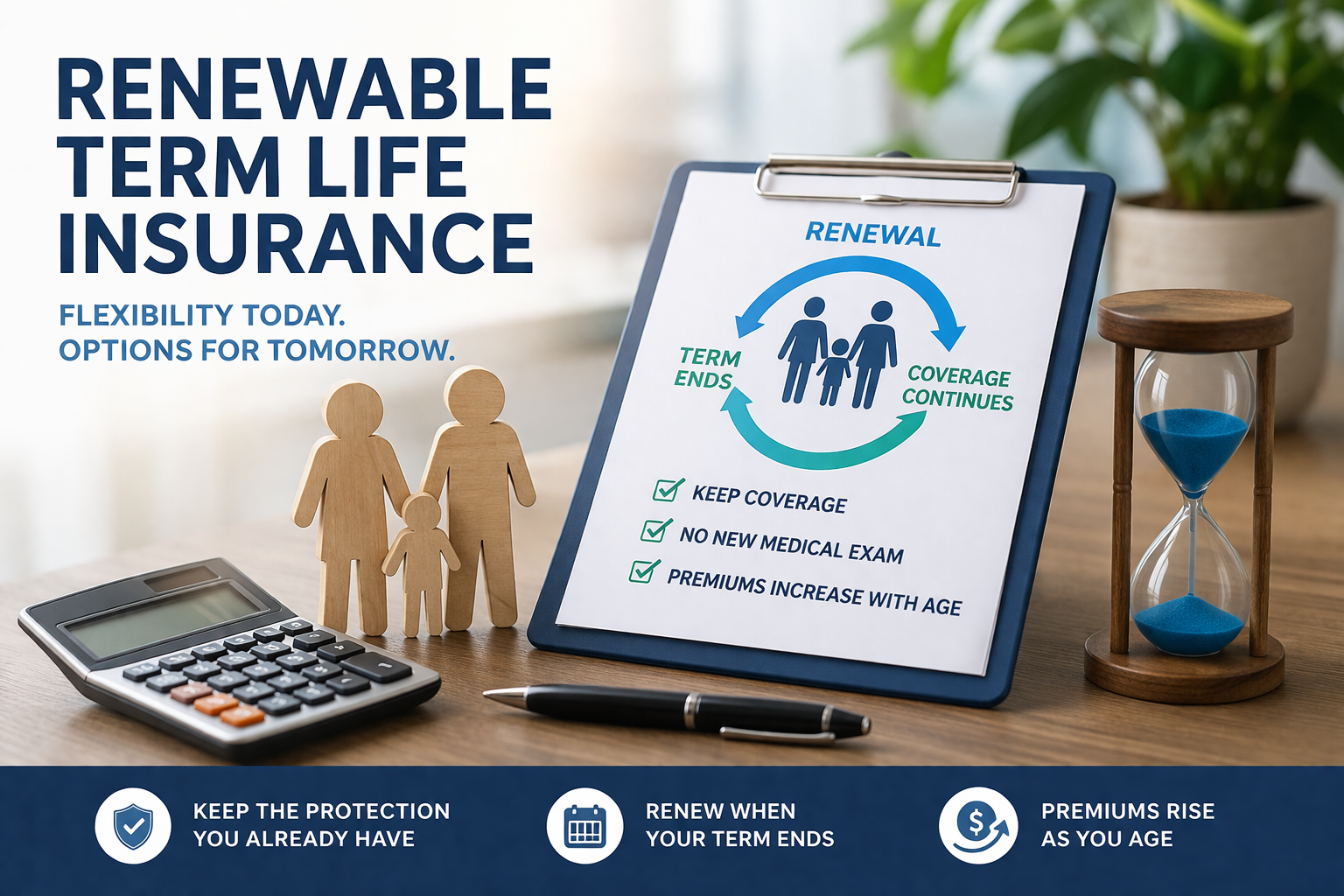
Renewable term life insurance means you may be able to keep coverage after the original level term ends without taking a new medical exam, but the premium usually rises significantly as you age.
- Renewable = you may continue coverage
- Premium usually jumps at renewal
- Health changes may matter less than age at renewal
- Renewal is often a backup option, not the best long-term plan

Scott Benton (a.k.a. Coach B.)
Author: Scott Benton, Licensed Life Insurance Agent
Experience: Serving families since 1992
Disclosure: Coach B. Insurance may be compensated if you purchase through our agency. Recommendations are based on product fit, underwriting, clarity, and usefulness — not pressure.
Editorial note: Renewable term life rules vary by carrier and contract. Renewal periods, age limits, conversion rights, and post-term pricing can differ meaningfully from one company to another.
What Renewable Term Life Insurance Is Really For
Renewable term life insurance is usually not about getting the cheapest long-term coverage.
It is usually about keeping a fallback option in place in case you still need life insurance after the original level term ends.
Common reasons people care about renewability include:
- they still need coverage after a 10-, 20-, or 30-year term ends
- their health has changed and buying new coverage may be harder
- they want flexibility while deciding whether to convert to permanent insurance
- they need temporary continued protection for a few more years
How Renewable Term Life Insurance Works
These are broad planning concepts. Always check the actual policy for age limits, renewal periods, and premium changes.
Why the Cost Changes So Much at Renewal
Age
The biggest reason premiums jump is simple: you are older when the policy renews.
Short renewal periods
Some renewable term policies renew year by year or in short blocks, which can make later coverage expensive fast.
Carrier pricing
Different insurers handle renewal pricing differently, even when the original face amount is the same.
Coverage amount
The larger the death benefit, the more painful the premium jump can feel after the initial term ends.
When Renewable Term Life Insurance Can Make Sense
Your health changed after the policy started
If buying a brand-new policy may be harder now, renewal can help keep some protection in place.
You only need a few more years of coverage
Renewal can be useful if you just need a short extension until retirement, payoff, or another milestone.
You need time to decide on conversion or replacement
Renewability can buy time while you decide whether to convert to permanent insurance or apply for new term coverage.
When It May Not Be the Best Fit
You are treating renewal like a cheap long-term strategy
Renewal is usually much more expensive later than buying the right term length upfront.
You could still qualify for a new policy
A new term policy may still cost less than renewing old coverage, especially if your health is still solid.
You really need permanent coverage
If the need is lifelong, converting or buying permanent insurance may be more logical than paying rising renewal premiums.
Renewable Term vs Other Options
How to Decide Whether Renewal Is the Right Move
Renewal may be reasonable if you want:
- a short extension of coverage
- time to compare new policies
- to avoid a new medical exam if health has worsened
- temporary protection while deciding whether to convert
A different option may be better if you want:
- another long level-premium term
- the lowest available cost going forward
- lifelong permanent coverage
- a cleaner long-term solution than year-by-year renewal
Common Mistakes People Make With Renewable Term Life Insurance
Assuming renewal will stay affordable
Renewable does not mean low-cost forever. It usually means the right to continue coverage at a higher rate.
Ignoring the original term length
Buying too short a term and counting on renewal later can become expensive fast.
Forgetting to compare a new policy
Sometimes a fresh term policy still beats the renewal price.
Confusing renewable with convertible
Renewable means you may keep term coverage. Convertible means you may change to permanent coverage.
Waiting too long to plan
The best time to compare renewal, replacement, or conversion is before the original term ends.
The Bottom Line
Renewable term life insurance can be valuable because it gives you a way to continue coverage after the original term ends.
But it is usually better viewed as a backup option than as your ideal long-term plan, because renewal premiums often rise sharply.
The smartest move is to understand your policy before the term expires so you can compare renewal, replacement, and conversion while you still have options.
Helpful Related Pages
Term Life Insurance
Best next page if you want the broader term life overview before focusing on renewability.
Explore Term Life →Convertible Term Life Insurance
Best next page if you are also comparing renewal with the option to convert term into permanent coverage.
Compare Convertible Term →20 vs 30 Year Term Life Insurance
Best next page if you are still deciding whether the original term length should be longer from the start.
Compare Term Lengths →How Much Life Insurance Do I Need?
Best next page if you are still trying to figure out how much coverage you would actually need going forward.
Read Coverage Guide →Frequently Asked Questions
What is renewable term life insurance?
Renewable term life insurance means you may be able to continue term coverage after the original term ends, usually without a new medical exam, but the premium typically increases.
Does renewable term life insurance stay level in price?
No. The original premium is usually level only during the initial term. Renewal premiums are usually much higher.
Is renewable term life insurance worth it?
It can be worth it as a backup option if your health changed or you only need a short extension of coverage, but it is not always the cheapest long-term solution.
What is the difference between renewable and convertible term life insurance?
Renewable term lets you continue term coverage. Convertible term lets you switch to permanent life insurance if the contract allows it.
What happens when term life insurance expires?
Coverage usually ends unless you renew it, convert it, or buy a new policy. That is why it is important to review your options before the term ends.


