
Using Life Insurance to Pay Off Debt: How It Really Works for Mortgages, Loans, and Family Protection
Yes, life insurance can be used to pay off debt — and for many families, that is one of the smartest reasons to own it in the first place.
The key is understanding what life insurance actually does. In most cases, the insurance company does not send money directly to your creditors. Instead, your beneficiaries receive the death benefit and can use it to pay off the mortgage, credit cards, personal loans, medical bills, or other debts that would otherwise create financial pressure.
This page explains how that works, which debts life insurance can cover, why term life is usually the best fit for debt protection, and what changes if you are trying to use permanent life insurance while you are still alive.

Scott Benton (a.k.a. Coach B.)
Author: Scott Benton, Licensed Life Insurance Agent (Coach B. Insurance)
Experience: Serving families since 1992
Disclosure: Coach B. Insurance may be compensated if you purchase through our agency. Recommendations are based on fit, underwriting, and clarity — not pressure.
Editorial note: This page is educational. Debt treatment after death depends on estate rules, ownership, co-signers, and state law.
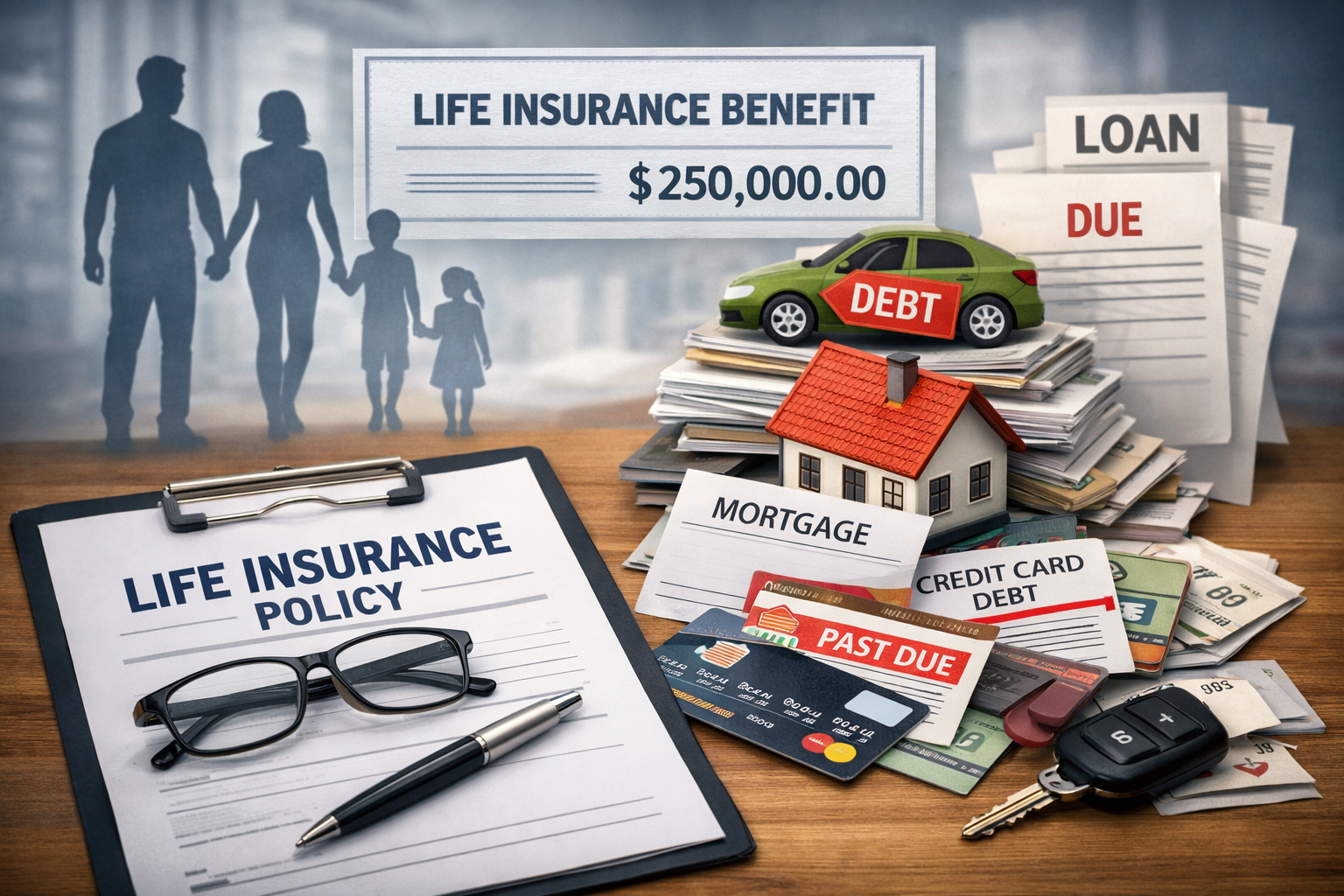
- How life insurance helps with debt payoff
- What debts can realistically be covered
- Why term life is usually the best fit
- Mortgage debt vs other debts
- Using permanent life insurance while alive
What “Using Life Insurance to Pay Off Debt” Really Means
In most cases, people are talking about the death benefit. If you die, the beneficiaries receive the payout and can use that money to eliminate debt, protect the home, and keep the family from having to sell assets or drain savings.
That flexibility is one of the biggest advantages of ordinary life insurance over narrower debt-specific products.
Simple version
- Beneficiaries receive the money
- They can choose how to use it
- Debt can be paid off first
- Remaining money can still support the family
What Types of Debt Can Life Insurance Pay Off?
Mortgage debt
Often the biggest concern because it affects whether the family can stay in the home.
Credit card balances
Life insurance can help keep these from forcing asset liquidation or financial strain.
Personal and auto loans
These are often part of the total protection amount families want covered.
Medical bills or other obligations
Any financial burden the family may need to absorb can be part of the planning target.
Debt Protection vs Asset Liquidation
Many people assume their savings or investments can handle debts after death. Sometimes that is true — but often it creates the wrong kind of pressure at the worst possible time.
Life insurance is often used because it can create immediate liquidity instead of forcing the family to sell investments, drain savings, or make rushed decisions.
Why families prefer insurance here
- Cash can arrive faster than selling assets
- Retirement accounts may be intended for other goals
- Investments may be down when the money is needed
- The family can keep more options open
Why Term Life Is Usually Best for Debt Protection
Affordable
Term life usually gives the most coverage for the lowest premium when the goal is debt protection.
Matches the debt timeline
You can often line the policy term up with the years the debt is expected to exist.
Simple and flexible
Beneficiaries can use the payout for the debt that matters most, instead of being locked into one narrow obligation.
Best next page for this: Term Life Insurance →
Matching the Policy to the Debt
| Debt Type | Common Coverage Strategy | Why |
|---|---|---|
| 30-year mortgage | 30-year term policy | Lines up with the life of the debt |
| 10- to 20-year debt window | 10-, 15-, or 20-year term policy | Protects during the years the balance matters most |
| Mixed household debts + income needs | Broader term policy sized for total obligations | Covers both payoff needs and family protection |
Mortgage Debt Is Usually the Biggest Emotional Concern
Paying off the mortgage is often the single biggest debt-protection goal families care about. The financial benefit is obvious, but the emotional benefit matters too: it can help the surviving spouse or children stay in the home without facing a forced move during an already painful time.
Some people choose mortgage protection insurance, but many families prefer a traditional term life policy because it offers more flexibility.
Why families focus on the mortgage
- It is often the largest debt
- It protects housing stability
- It can prevent downsizing under pressure
- It gives the family more options
Debt Payoff Is One of the Clearest Reasons Life Insurance Exists
The goal is not just leaving money behind. It is making sure your family does not inherit your financial mess while they are grieving.
What Happens to Debt If There Is No Life Insurance?
Estate pressure
Debts may need to be settled through the estate, which can reduce what is left for heirs.
Asset liquidation
Property or investments may need to be sold to create cash.
Family strain
Even when debts are not directly inherited, the financial ripple effect can still hurt the family badly.
Can Life Insurance Pay Off Debt While You’re Still Alive?
In some cases, yes — but that is a different strategy. With permanent life insurance like whole life or universal life, you may be able to borrow against the cash value or use it in other ways while you are alive.
That can help in certain debt situations, but it also creates tradeoffs. Loans and withdrawals can reduce cash value and may reduce the death benefit if not managed properly.
This usually applies to
- Whole life insurance
- Universal life insurance
- Policies with built-up cash value
Universal Life Insurance →
How Much Life Insurance Do You Need to Cover Debt?
1. Add total outstanding debts
Mortgage, personal loans, auto loans, credit cards, and any other obligations you want covered.
2. Add income replacement needs
Debt payoff alone may not be enough if your household also depends on your paycheck.
3. Add final expenses
Funeral and end-of-life costs should not be ignored.
4. Build in breathing room
A little extra can make a major difference in flexibility for the family.
Best next page for this: How Much Life Insurance Do I Need? →
Common Misunderstandings About Life Insurance and Debt
“My debts automatically disappear”
Some obligations may end, but many debts are still handled through the estate or affect surviving family finances indirectly.
“Life insurance only pays for funerals”
It can be used for far more than final expenses, including mortgage and debt protection.
“My spouse will never feel the debt impact”
Joint debts, co-signed obligations, housing costs, and income loss can all still create real strain.
“Any policy works the same”
Debt-specific products, term life, and permanent life all solve different problems in different ways.
Helpful Next Pages
Life Insurance for Homeowners
Best next page if your main concern is protecting the home and mortgage.
Explore Homeowner Protection →Life Insurance for Income Replacement
Best next page if your bigger concern is replacing a paycheck as well as covering debt.
Explore Income Replacement →How Much Life Insurance Do I Need?
Best next page if you want to calculate the right amount for debts, income, and final expenses together.
Explore Coverage Calculator Guide →What Disqualifies a Life Insurance Payout?
Best next page if your concern is whether the family will actually receive the benefit when they need it.
Explore Payout Protection →Frequently Asked Questions About Using Life Insurance to Pay Off Debt
Can life insurance be used to pay off debt?
Yes. In most cases, beneficiaries can use the death benefit to pay off mortgages, loans, credit cards, and other debts.
Does life insurance automatically pay creditors?
Usually no. In most ordinary situations, the beneficiaries receive the money and decide how to use it unless a more specific structure is in place.
Is term life insurance good for debt protection?
Yes. For many families, term life is the most practical choice because it is affordable and can be matched to the years the debt exists.
Can life insurance pay off a mortgage?
Yes. Paying off the mortgage is one of the most common reasons families use life insurance as part of protection planning.
Can permanent life insurance help with debt while you’re alive?
Sometimes. Whole life or universal life may allow access to cash value, but using it this way requires careful planning.


