
Does Life Insurance Cover Suicide? The Suicide Exclusion Period Explained
Usually, life insurance may not pay a death benefit for suicide during the policy’s suicide exclusion period. After that period ends, a claim is often payable unless another policy issue applies.
That is why this page matters. Most people are not asking a broad claims question. They are trying to understand one narrow rule: what the suicide clause means, how long it usually lasts, and whether it works differently in individual, group, or replacement coverage.
The real question is not just whether life insurance covers suicide. The real question is when the exclusion applies, when it usually stops applying, and what policy details still matter before anyone assumes a claim will be paid or denied.
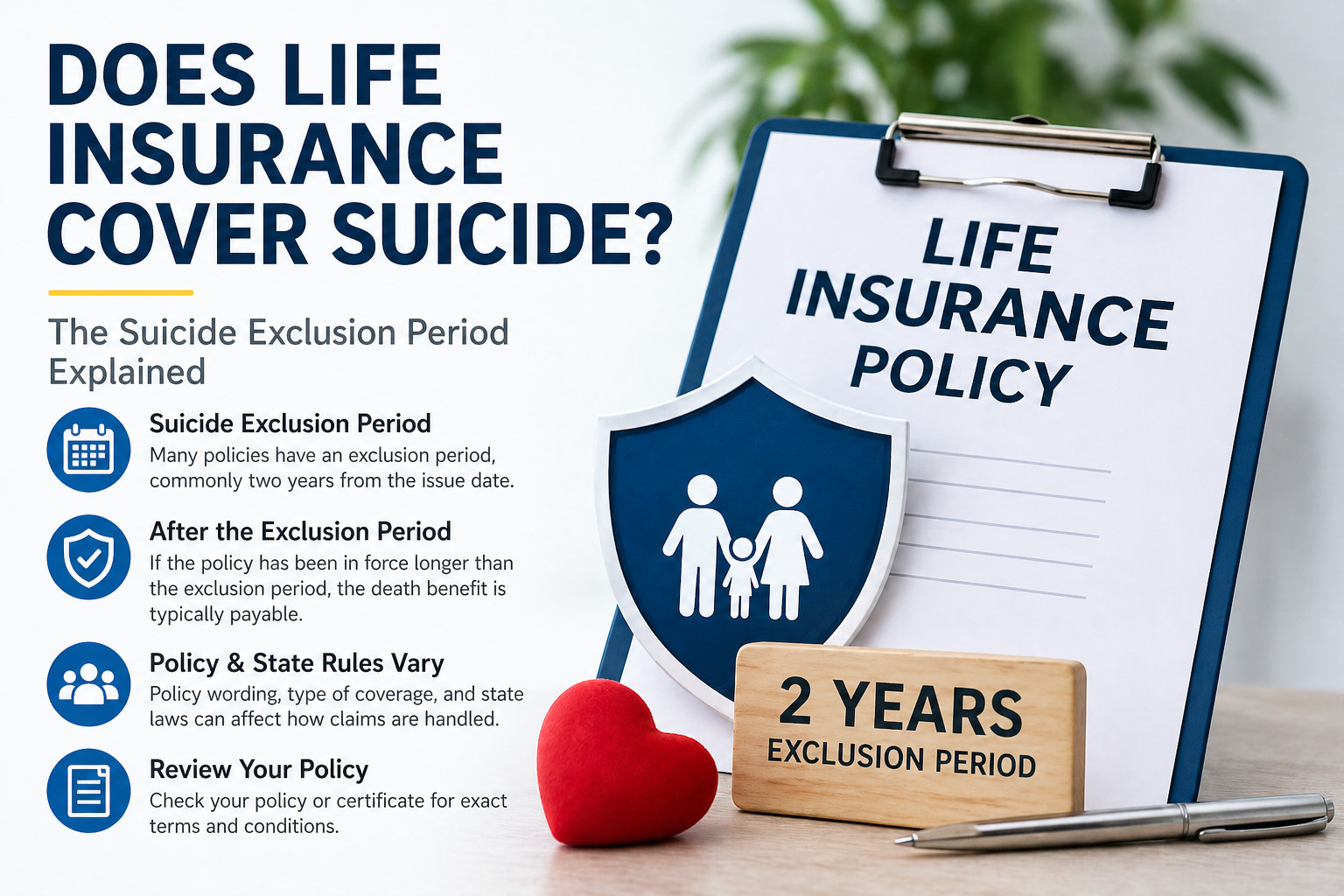
- A suicide exclusion is common in life insurance.
- Two years is especially common, though policy and state rules can vary.
- After that exclusion period, a claim is often payable unless another issue applies.
- The suicide clause is not the same thing as the contestability period.
- Group, supplemental, replacement, and converted coverage can work differently, so the certificate and policy language matter.

Scott Benton (a.k.a. Coach B.)
Author: Scott Benton, Licensed Life Insurance Agent
Experience: Serving families since 1992
Disclosure: Coach B. Insurance may be compensated if you purchase through our agency. Recommendations are based on fit, clarity, and usefulness — not pressure.
Editorial note: This page is educational and claim-specific language can vary by policy, certificate, state, and how the coverage was issued or converted.
What the Suicide Clause Usually Means
A suicide clause is a policy provision that can limit or exclude payment if the insured dies by suicide during a stated period after coverage begins.
It is common
Many life insurance policies use this kind of exclusion.
It is timed
The clause usually applies only during a defined exclusion window.
It is policy-specific
The exact wording and payout terms can vary.
It is not forever
After the exclusion period ends, claims are often handled differently.
How Long Is the Suicide Exclusion Period?
Two years is especially common
Many individual life policies use a two-year suicide exclusion period, though policy language and state rules can vary.
After that, the analysis changes
Once the exclusion period ends, a claim is often payable unless another separate policy issue applies.
The simplest answer
If the death happens during the exclusion period, the policy may not pay the full death benefit. If it happens after the exclusion period, the claim is often payable unless the insurer is relying on some other valid policy defense.
Suicide Clause vs Contestability Period
| Policy Rule | What It Usually Focuses On | Why It Matters |
|---|---|---|
| Suicide clause | Whether the policy excludes or limits payment for suicide during a stated time window | This is the specific rule most people mean when they ask this question |
| Contestability period | Whether the insurer can contest the policy for material misrepresentation or other application issues during an early period | This is related to claims review, but it is not the same thing as the suicide clause |
These periods often overlap in timing, but they are not the same policy mechanism.
What Is Often Paid During the Exclusion Period?
Usually not the full death benefit
If the exclusion applies, the full face amount is often not payable.
Premium refund language is common
Many policies or certificates instead describe a return of premiums paid, sometimes adjusted for dividends or indebtedness depending on the contract language.
Does Group Life Insurance Work the Same Way?
Not always
Group coverage is not one uniform thing. Basic employer-paid coverage and optional supplemental coverage can work differently.
Supplemental coverage often matters most
Optional or supplemental group life certificates commonly include suicide exclusions, especially in the first years of coverage or for increased amounts.
Read the certificate
The certificate or group policy language controls. Do not assume employer coverage is automatically exempt from this issue.
What About Replacing, Converting, or Increasing Coverage?
Do not assume every change works the same way
A brand-new policy, a conversion, and an increase in death benefit are not always treated identically for suicide-exclusion timing.
Conversion can be different
In some regulated forms, a converted policy does not restart the suicide period for the same or lesser amount, while increases or newly applied-for amounts may still be treated differently.
Why this matters
If a policy was replaced, converted, reinstated, or increased, the claim review should start with the actual policy dates, certificate dates, and endorsement language instead of assumptions.
What Beneficiaries Should Check First
Issue date
The starting date of coverage matters immediately.
Type of coverage
Individual, group, basic, supplemental, converted, or replaced coverage can matter.
Exclusion wording
The policy or certificate language controls, not internet summaries.
Any recent increase or change
Coverage increases and policy changes can matter to timing analysis.
How Coach B Would Think About It
Step 1: isolate the timing
The first issue is always whether the death occurred during or after the exclusion window.
Step 2: identify the exact coverage type
Individual, group, supplemental, converted, or increased coverage can change what matters next.
Step 3: read the real contract language
This is not an area for guessing. The certificate, endorsements, and policy wording decide the outcome.
The Bottom Line
Life insurance often does cover suicide after the policy’s suicide exclusion period ends, but it often does not pay the full death benefit if the death happens during that exclusion window.
The most important details are timing, policy type, and exact contract language. Group basic coverage, supplemental group coverage, converted coverage, and increased coverage can all bring different details into play, so this is one of those questions where the actual policy documents matter more than broad internet summaries.
Helpful Related Pages
What Disqualifies a Life Insurance Payout?
Best next page if your bigger question is not suicide specifically, but the broader list of reasons a claim may be denied or reduced.
See Broader Payout Issues →Applying for Life Insurance
Best next page if you want to understand how application accuracy affects later claims review.
See Application Basics →Life Insurance Buyer’s Guide
Best next page if you want the broader framework for understanding policy terms, exclusions, and what to check before buying.
Open Buyer’s Guide →Frequently Asked Questions
Does life insurance cover suicide?
Usually not during the policy’s suicide exclusion period, but often yes after that period ends unless another separate policy issue applies.
How long is the suicide clause in life insurance?
Two years is especially common, though policy language and state rules can vary.
Is the suicide clause the same thing as the contestability period?
No. They often overlap in timing, but they are separate policy mechanisms and should not be treated as interchangeable.
Does group life insurance cover suicide?
Sometimes, but group coverage varies a lot. Basic employer-paid coverage and supplemental optional coverage should be checked separately because the certificate language matters.
Can conversion or replacement affect the suicide period?
Yes. Converted, replaced, or increased coverage does not always work the same way, so the policy dates and endorsements should be reviewed carefully.


