
How Coach B Reviews Life Insurance Companies
Not every life insurance company is best for every shopper. Coach B reviews life insurance companies by matching carriers to real buying situations, not by naming one universal winner for everyone.
This methodology explains how Coach B evaluates life insurance companies, review pages, company-vs-company comparisons, and “best” recommendations across term life, no-exam coverage, final expense, senior life insurance, and health-condition shopping.
The goal is simple: help shoppers build a smarter shortlist based on price, underwriting fit, policy type, application ease, financial strength, and the real job the policy needs to do.
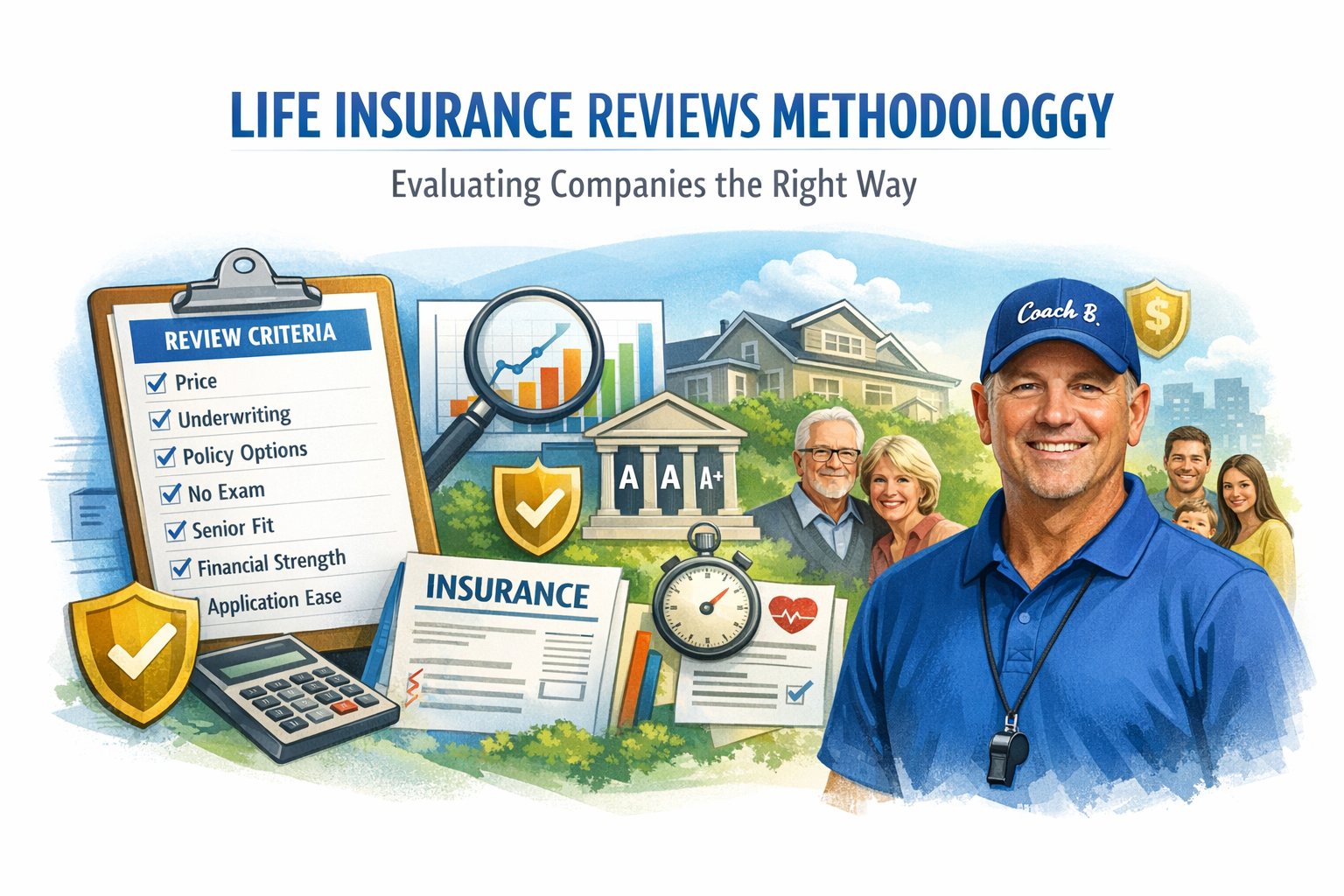
- Coach B reviews companies by shopper fit, not one-size-fits-all rankings.
- Price matters, but underwriting fit can matter more.
- Different pages may recommend different companies because shopper needs differ.
- Company reviews look at policy type, approval path, financial strength, and practical value.
- Reviews are meant to build a smarter shortlist before comparing quotes.

Scott Benton | Coach B. Insurance
Author: Scott Benton, Licensed Life Insurance Agent
Experience: Serving families since 1992
Editorial approach: Reviews are built around shopper fit, underwriting practicality, policy usefulness, and value.
Phone: (800) 342-1537
Disclosure: Coach B. Insurance may be compensated when a consumer purchases through the agency or referral partners. Compensation does not replace the review categories used to evaluate carriers, products, and shopper fit.
What “Best” Means on Coach B. Insurance
On Coach B. Insurance, “best” does not mean one company is automatically the best for every person. A carrier that is strong for a healthy 35-year-old parent may not be the best fit for a senior final expense shopper, a no-exam buyer, or someone applying after a serious health diagnosis.
A company is considered “best” only when it appears useful for a specific shopper profile, policy type, coverage goal, and underwriting situation.
Best for healthy term shoppers
Price, term length, conversion options, and underwriting class matter most.
Best for no-exam buyers
Speed, application ease, digital underwriting, and approval realism matter most.
Best for seniors
Age limits, final expense options, waiting periods, and fixed premiums matter most.
Best for health conditions
Underwriting flexibility, diagnosis history, medications, and approval odds matter most.
Main Scoring Categories
These are the core factors Coach B uses when evaluating life insurance companies, reviews, best-company pages, and comparison pages.
| Factor | What We Look For | Why It Matters |
|---|---|---|
| Price Competitiveness | How well a carrier competes on premium for the shopper type it serves best. | Price matters, especially for term life, family protection, and mortgage protection. |
| Underwriting Flexibility | How well a carrier may fit different health histories, prescriptions, ages, and risk classes. | This often matters more than brand recognition or the lowest advertised quote. |
| Policy Options | Whether the carrier offers relevant term, whole life, universal life, no-exam, simplified, or final expense products. | A company is only useful if the product lineup matches the buyer’s real need. |
| No-Exam and Speed Options | How useful the company is for online shoppers, accelerated underwriting, instant issue, or no-exam pathways. | Convenience matters, but no-exam should still provide real value. |
| Senior-Market Fit | How well the company fits older applicants, final expense shoppers, and simplified approval needs. | Senior life insurance is a different shopping category than standard term life. |
| Financial Strength | General insurer stability and ability to support long-term obligations. | Life insurance is a long-duration promise, so carrier stability matters. |
| Rider and Conversion Usefulness | Whether policy extras, living benefits, waiver riders, or conversion options add practical value. | Some features can matter a lot when the policy is designed correctly. |
| Application Ease | How simple, fast, or friction-heavy the buying process tends to be. | A policy is only useful if the buyer can realistically get approved and placed in force. |
How We Evaluate Different Page Types
Not every life insurance page should be judged the same way. A company review, a best-company roundup, a versus comparison, and a health-condition page all answer different questions.
| Page Type | Main Question It Should Answer | What We Evaluate |
|---|---|---|
| Best-Company Pages | Which companies make the most sense for this shopper type or policy need? | Carrier fit, policy category, pricing, approval path, shopper scenario, and alternatives. |
| Carrier Reviews | Who is this company best for, and who should compare alternatives? | Strengths, weaknesses, product fit, underwriting fit, application experience, and best uses. |
| Company-vs-Company Pages | Which company is better for a specific type of buyer? | Term value, no-exam options, senior fit, health-condition flexibility, riders, and decision criteria. |
| Health-Condition Pages | What is the realistic path to approval for this medical history? | Underwriting strategy, carrier appetite, policy type, records, prescriptions, stability, and timing. |
| Local Life Insurance Pages | How should shoppers in this city or state compare coverage? | Local intent, licensed-agent trust, quote paths, state relevance, and family/business needs. |
How We Think About Price
Price matters. A life insurance policy has to be affordable enough to keep. But the cheapest company is not automatically the best company if the underwriting fit, policy type, or coverage amount is wrong.
Coach B reviews value through the lens of “fit first, price second.” The lowest premium is only useful if the company can realistically approve the applicant for the right kind of policy.
When price carries more weight
- term life insurance comparisons
- family income protection shopping
- mortgage protection planning
- larger coverage amounts for healthy buyers
- company-vs-company term comparisons
When fit carries more weight
- health-condition shopping
- prior declines or rated offers
- senior and final expense coverage
- no-exam and instant issue options
- guaranteed issue or graded-benefit policies
How We Think About Underwriting Flexibility
Underwriting flexibility is one of the most important parts of life insurance company evaluation. A company can look affordable in a quote table but still be a poor fit if it is not likely to approve the applicant’s real profile.
Healthy shoppers
For straightforward profiles, the best company may be the one with strong term pricing, fast approval, and useful conversion options.
Moderately complex cases
For controlled health issues or prescription history, carrier flexibility can matter as much as price.
Harder-to-insure cases
For serious health conditions or prior declines, the best company may be the one most likely to offer realistic approval.
How We Use Financial Strength and Reputation
Financial strength matters because life insurance is a long-term promise. Brand familiarity can also help shoppers feel more confident when comparing companies.
However, Coach B does not treat brand recognition as a substitute for policy fit. A familiar company can still be the wrong choice if the product, underwriting, or premium is not right for the shopper.
Financial strength
Supports confidence that the insurer can meet long-term obligations.
Reputation
Can help shoppers compare companies they recognize and trust.
Fit still wins
A strong brand does not automatically make it the best company for every case.
Third-Party Sources We May Reference
Coach B may review public insurer information and third-party resources that help support company comparisons. These sources add context, but they do not replace practical shopper-fit analysis.
| Source Type | How It Helps | How We Use It |
|---|---|---|
| Financial-strength ratings | Provide context about insurer stability and long-term claims-paying strength. | Used as one factor, not the only ranking factor. |
| Consumer complaint resources | Help identify possible customer-service or claims-experience patterns. | Used for context when comparing carriers and shopper experience. |
| Carrier product information | Helps confirm policy types, riders, issue ages, coverage ranges, and product positioning. | Used to understand where a company may or may not fit. |
| Quote and application experience | Shows how pricing, application ease, and policy availability may work in practice. | Used to evaluate practical shopper experience and friction. |
How We Handle Compensation and Objectivity
Coach B. Insurance may be compensated when a consumer purchases through the agency or referral partners. That is part of how an insurance business operates.
Compensation does not replace the review methodology. Reviews and best-company pages are organized around consumer usefulness, policy fit, underwriting practicality, and clear comparison logic.
Compensation disclosed
Pages disclose that Coach B may be compensated through agency or referral relationships.
Fit-based reviews
Company recommendations are framed around shopper scenarios and policy needs.
No universal winner
Not every company is right for every person, even if it appears on a best-company list.
Comparison encouraged
Reviews are meant to help shoppers compare, not blindly select one company.
How Often Pages Are Reviewed and Updated
Life insurance products, carrier positioning, quote paths, underwriting appetites, and comparison ecosystems can change. Coach B reviews and updates pages when the content, links, positioning, or cluster strategy needs improvement.
| Page Type | Review Trigger | Update Focus |
|---|---|---|
| Best-Company Pages | Recurring review or when strategy, ranking, links, or carrier fit changes. | Sharper recommendations, better comparison charts, and stronger internal links. |
| Carrier Reviews | When product fit, positioning, or the surrounding comparison ecosystem changes. | Who the company fits, who should avoid it, and which alternatives to compare. |
| Company-vs-Company Pages | When either company page changes or the comparison needs more precision. | Decision criteria, shopper scenarios, pricing context, and coverage fit. |
| Health-Condition Pages | When the health cluster expands or guidance needs to become more specific. | Underwriting strategy, case details, carrier matching, and realistic approval paths. |
What We Do Not Do
- We do not pretend one company is automatically best for every shopper.
- We do not crown winners by price alone.
- We do not assume the most famous brand is the right fit.
- We do not compare unlike products as if they are identical.
- We do not ignore waiting periods on final expense or guaranteed issue products.
- We do not treat no-exam coverage as automatically better.
- We do not skip underwriting realities for health-condition shoppers.
- We do not use “best” recommendations as a replacement for quote comparison.
How to Use Coach B Reviews the Right Way
Use Coach B reviews to narrow the field intelligently. A review page should help you understand which companies deserve a place in your shortlist based on age, health, policy type, budget, and coverage goal.
Start with your goal
Know whether you need term, whole life, no-exam, final expense, or guaranteed issue.
Read the right page
Use a carrier review, best-company page, versus page, or health-condition guide.
Compare fit
Review price, underwriting, policy type, rider value, and application path together.
Compare quotes
Use the review to build a shortlist, then compare real options before applying.
Related Pages
Life Insurance Company Reviews
Browse the main review and comparison directory.
View Review Directory →Best Life Insurance Companies
See the main best-company roundup built around this methodology.
View Best Companies →Best Term Life Companies
See how the methodology applies to term life shoppers.
View Term Companies →How to Compare Quotes
Learn how methodology and real quote comparison work together.
Compare Quotes →The Bottom Line
Coach B reviews life insurance companies by matching carriers to real shopper scenarios. The goal is not to name one company as the universal winner. The goal is to help you compare the companies most likely to fit your age, health, policy type, coverage amount, and budget.
Use reviews and best-company pages as shortlist-building tools, then compare policy structure, price, underwriting fit, and approval path before choosing coverage.
Frequently Asked Questions About Our Review Methodology
How does Coach B decide which life insurance companies are best?
Coach B evaluates companies by shopper fit, price competitiveness, underwriting flexibility, policy options, no-exam usefulness, senior-market fit, financial strength, rider value, and application ease.
Does the cheapest company automatically rank highest?
No. Price matters, but the cheapest company is not automatically best if the policy type, underwriting fit, coverage amount, or approval path is wrong for the shopper.
Why do different pages recommend different companies?
Different pages target different shopper needs. The best company for healthy term-life buyers may not be best for seniors, no-exam shoppers, final expense buyers, or people with health conditions.
Does compensation affect rankings?
Coach B. Insurance may be compensated when a consumer purchases through the agency or referral partners, but the methodology is designed around fit, value, usefulness, and clear comparison for the shopper.
How should I use a best life insurance companies page?
Use it as a shortlist-building tool. A best-company page should help you identify which carriers deserve comparison, not replace the need to compare quotes and policy structure.
How often does Coach B update reviews?
Reviews and best-company pages may be updated when product fit, carrier positioning, internal links, quote strategy, underwriting guidance, or comparison usefulness needs improvement.


