
Life Insurance for Women: Why It Matters, How Much You May Need, and Best Options
Life insurance for women is not just about replacing a paycheck. It is about protecting everything a woman may bring to a household, a family, or a business — income, caregiving, stability, future plans, and the financial space loved ones would need if she were gone.
That is why this page matters. Many women are not just asking whether they need life insurance. They are asking whether they need it if they are single, married, a mom, divorced, self-employed, helping aging parents, or doing unpaid work that would still cost real money to replace.
The real question is not just whether women need life insurance. The real question is what financial role you play in other people’s lives and how much protection would actually be needed if that role suddenly disappeared.
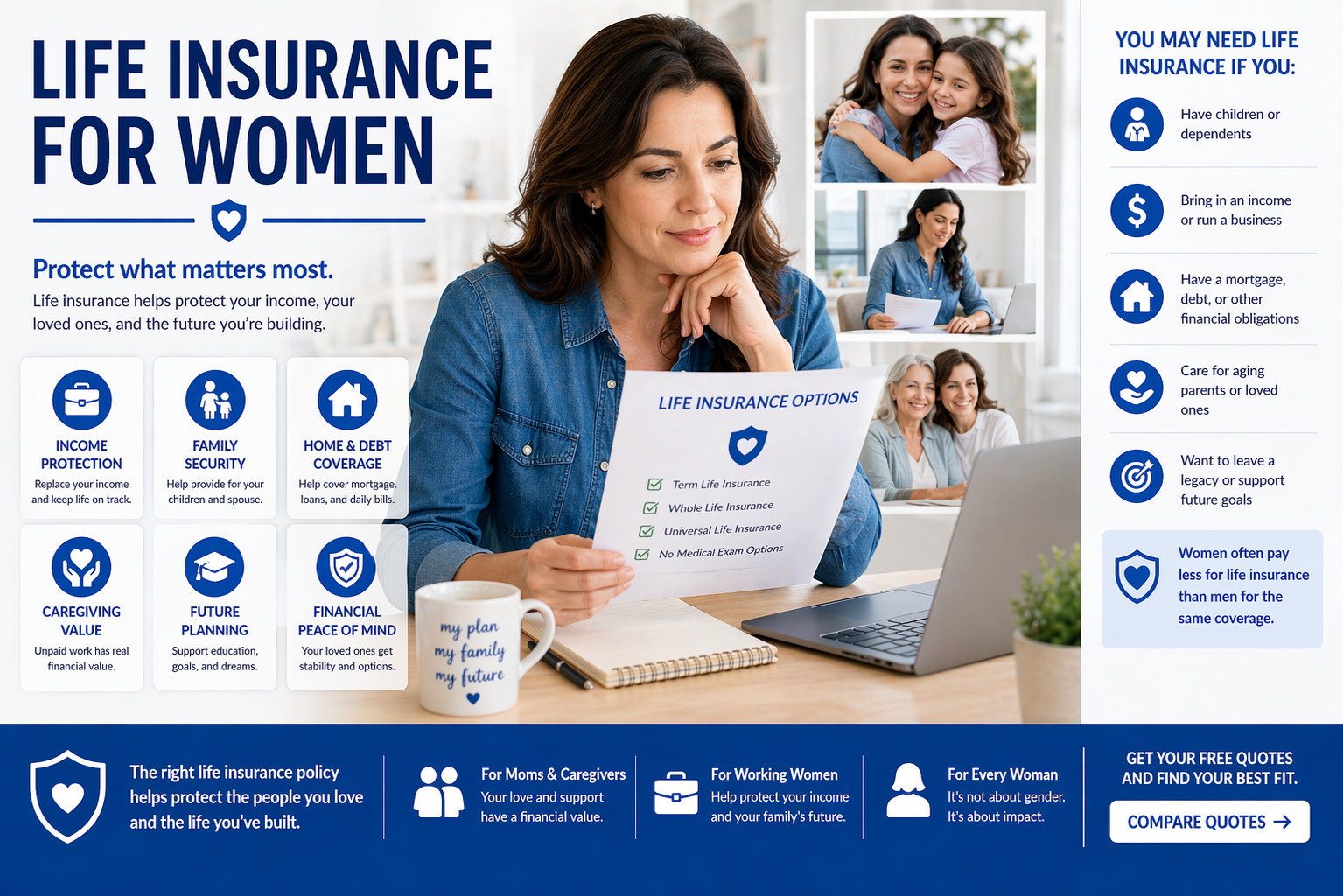
- Women often need life insurance for the same reason men do: someone would be financially affected if they died.
- That financial impact can come from income, childcare, household management, caregiving, business ownership, or debt.
- Single women may still need coverage if they have debt, dependents, aging parents, or future planning goals.
- Moms and stay-at-home moms often need coverage because unpaid work still has real replacement value.
- The best policy depends on whether the need is temporary, permanent, budget-based, or health-driven.

Scott Benton (a.k.a. Coach B.)
Author: Scott Benton, Licensed Life Insurance Agent
Experience: Serving families since 1992
Disclosure: Coach B. Insurance may be compensated if you purchase through our agency. Recommendations are based on product fit, underwriting, clarity, and usefulness — not pressure.
Editorial note: This page is meant to be the broad women’s guide. It is not just for moms. It is for women whose income, work, caregiving, planning, or household role would leave a real financial hole behind.
Why Life Insurance for Women Matters
Women often underestimate how much financial value they bring to the people around them. Sometimes that value is obvious, like a paycheck. Sometimes it is less obvious, like childcare, household organization, elder support, or the way one person keeps a family budget and daily life functioning.
Income protection
If your income helps support a household, children, or debt payments, coverage may be critical.
Caregiving value
Unpaid caregiving still has real replacement cost, even if no paycheck is attached to it.
Debt and obligations
Student loans, co-signed loans, mortgages, business loans, or family obligations can make coverage important.
Future planning
Some women use life insurance as part of long-term planning, family security, or estate goals.
Which Women Often Need Life Insurance Most?
Working women
If your income supports a household, life insurance may be one of the cleanest ways to protect that cash flow.
Moms
If children depend on your income or your daily work, the financial impact of your loss can be substantial.
Stay-at-home moms
Even without outside income, the cost of replacing childcare, transportation, and household support can be significant.
Single women
Coverage can still make sense when there is debt, family responsibility, business ownership, or future planning involved.
Married women
Marriage alone is not the reason. The real issue is whether your death would affect a spouse financially or operationally.
Divorced women
Coverage can matter even more when there are children, support obligations, or only one household income to rely on.
Women business owners
A business owner may need coverage for family protection, business continuity, loans, or key-person concerns.
How Much Life Insurance a Woman May Need
| Main Situation | What Usually Needs Protection | What to Think About |
|---|---|---|
| Income earner | Paycheck replacement, debt, housing, children | How long your income would need to be replaced |
| Stay-at-home parent | Childcare, transportation, housekeeping, scheduling, support | What it would cost to replace your role with paid help |
| Single woman | Debt, family support, business needs, future legacy goals | Whether someone else would inherit a financial problem if you died |
| Married woman with children | Family income, child costs, mortgage, education planning | How much total family protection is already in place versus still needed |
The right amount is not just based on gender. It is based on your actual financial role.
Best Types of Life Insurance for Women
Term life insurance
Usually the best fit when the goal is affordable protection for income, kids, mortgage, or debt during working years.
Whole life insurance
Can fit buyers who want permanent coverage, fixed premiums, and long-term planning.
Universal life insurance
May fit women looking for permanent coverage with more flexibility than traditional whole life.
Final expense or smaller permanent coverage
Can fit later-life planning or situations where the main goal is burial and final-bill protection.
Common Mistakes Women Make With Life Insurance
Mistake #1: thinking no paycheck means no need
That is one of the biggest misses. Unpaid household and caregiving work often has a very real replacement cost.
Mistake #2: assuming workplace coverage is enough
Work coverage can be a helpful start, but it often is not enough by itself and may not follow you if the job changes.
Mistake #3: buying too little
A small policy can feel better than nothing, but it may not solve the actual problem your family would face.
Mistake #4: waiting too long
Life insurance is usually easier and cheaper to buy before age and health changes make the process harder.
How Coach B Would Help a Woman Shop This
Step 1: define the real role
The first job is understanding whether the protection need is income, caregiving, debt, business, or all of the above.
Step 2: match the policy to the need
Temporary needs usually point toward term. Lifetime planning needs may point toward permanent coverage.
Step 3: compare enough options
The best fit often comes from comparing more than one carrier and more than one product lane before deciding.
The Bottom Line
Women need life insurance for the same core reason anybody does: someone would be financially affected if they died.
But the details matter. Sometimes the issue is a paycheck. Sometimes it is childcare, caregiving, debt, or future family stability. The right policy is the one that matches the real role you play, not the stereotype people assume you play.
Helpful Related Pages
Life Insurance for Parents
Best next page if your main question is protecting children and family life as a parent.
See Life Insurance for Parents →Life Insurance for Stay-at-Home Parents
Best next page if your main issue is the replacement cost of unpaid caregiving and household work.
See Stay-at-Home Parent Coverage →Life Insurance for New Parents
Best next page if your coverage question became urgent after a new baby or growing family.
See New Parent Coverage →Life Insurance for Income Replacement
Best next page if the main goal is replacing earnings for a spouse, children, or household.
See Income Replacement Coverage →Life Insurance Rates
Best next page if your next question is what affects price and how to compare value.
See Life Insurance Rates →Life Insurance Calculator
Best next page if you want to estimate how much coverage makes sense for your situation.
Use the Coverage Calculator →No Medical Exam Life Insurance
Best next page if simplicity and speed matter more than a full underwriting process.
Explore No-Exam Options →Frequently Asked Questions
Do women need life insurance?
Yes, if someone would be financially affected by their death. That can include income, caregiving, debt, or household support.
Do stay-at-home moms need life insurance?
Often yes. The unpaid work a stay-at-home mom does can still cost real money to replace.
Do single women need life insurance?
Sometimes yes. It depends on debt, dependents, family obligations, business needs, and long-term planning goals.
What type of life insurance is best for women?
There is no one best type for all women. Term is often best for temporary protection, while whole life or universal life may fit longer-term needs.
How much life insurance should a woman have?
Enough to protect the real financial role she plays, whether that means income replacement, childcare, debt protection, or family stability.


