
Guaranteed Universal Life vs Whole Life: Which One Is Better?
Guaranteed universal life and whole life are both permanent life insurance, but they solve different jobs. Guaranteed universal life usually focuses more on keeping the death benefit in force at a lower cost, while whole life usually puts more emphasis on guarantees plus cash value growth.
That is why this page matters. Buyers comparing guaranteed universal life vs whole life are usually already beyond basic life insurance questions. They are trying to decide which permanent policy better fits estate planning, family protection, legacy goals, or long-term affordability.
This guide breaks down the real differences between GUL and whole life, what each policy is best for, where people get confused, and how to choose the one that actually fits your goals instead of just sounding good on paper.
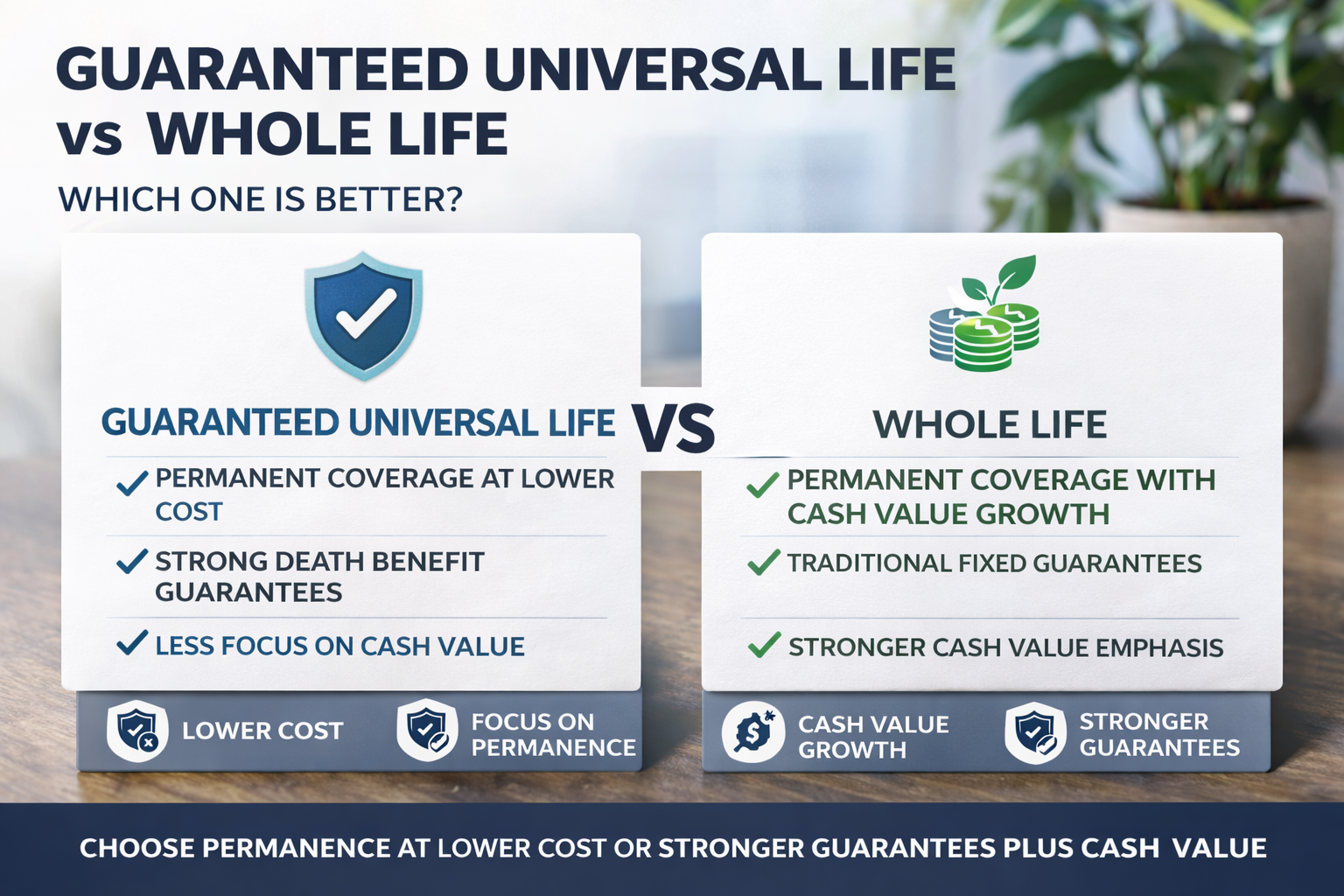
Guaranteed universal life is often better when you mainly want permanent death benefit protection at a lower cost than whole life. Whole life is often better when you want stronger cash value guarantees, more structured long-term policy design, and are willing to pay more for it.
- GUL = lower-cost permanent protection focus
- Whole life = stronger cash value focus
- Both can provide permanent coverage
- The better choice depends on what job you need the policy to do

Scott Benton (a.k.a. Coach B.)
Author: Scott Benton, Licensed Life Insurance Agent
Experience: Serving families since 1992
Disclosure: Coach B. Insurance may be compensated if you purchase through our agency. Recommendations are based on product fit, underwriting, clarity, and usefulness — not pressure.
Editorial note: GUL and whole life design can vary significantly by carrier. Guarantee duration, cash value strength, policy funding assumptions, and rider options all affect which one is the better fit.
What This Comparison Is Really About
This comparison is usually not about deciding which policy is “better” in the abstract.
It is usually about deciding whether you care more about keeping permanent coverage in force as efficiently as possible or about having a more robust cash value and guarantee structure over time.
Common reasons people compare guaranteed universal life and whole life include:
- estate and legacy planning
- permanent family protection
- business or succession planning
- balancing long-term guarantees with budget realities
Guaranteed Universal Life vs Whole Life at a Glance
These are broad planning comparisons. Real policy details vary by carrier and design.
Why Buyers Choose Guaranteed Universal Life
Lower cost than whole life
GUL often appeals to people who want permanent protection without paying whole life premiums.
Strong death benefit focus
Many buyers care more about keeping the death benefit in place than building cash value.
Useful for estate planning
GUL is often used when the permanent death benefit matters more than policy accumulation.
No-lapse design appeal
Many buyers like the idea of a policy built around staying in force when properly funded.
Why Buyers Choose Whole Life
Stronger cash value guarantees
Whole life is often chosen by buyers who want more structured long-term policy value.
Fixed and predictable structure
Some buyers prefer the simpler feel of fixed premiums and guaranteed values.
Long-term policy building
Whole life often fits buyers who want permanence plus more internal policy value over time.
Dividend potential with some carriers
Depending on the company, participating whole life may offer additional upside beyond the guarantees.
When Guaranteed Universal Life Can Make More Sense
You mainly want permanent death benefit protection
If the death benefit is the main goal, GUL is often the cleaner and more efficient choice.
Budget matters
GUL often fits buyers who want permanence but cannot justify whole life pricing.
Cash value is not your priority
If you are not buying the policy for long-term cash growth, GUL often makes more sense.
When Whole Life Can Make More Sense
You value cash value growth more
Whole life is often the better fit if cash value strength is a major reason you are buying permanent insurance.
You want traditional policy guarantees
Some buyers simply prefer the classic fixed-premium, guaranteed-value structure of whole life.
You are comfortable paying more for long-term policy value
Whole life usually costs more, but some buyers view the stronger internal policy value as worth it.
GUL vs Whole Life vs Other Options
How to Decide Which One Fits You Best
GUL may fit better if you want:
- permanent coverage at a lower cost than whole life
- a strong death benefit guarantee focus
- less concern about cash value growth
- a product built more around protection than accumulation
Whole life may fit better if you want:
- stronger long-term cash value
- traditional fixed guarantees
- more predictable internal policy structure
- permanent coverage plus stronger policy value over time
Common Mistakes People Make With This Comparison
Assuming permanent means identical
Both are permanent, but they are not designed to do the same job the same way.
Ignoring cash value priorities
Cash value is often the biggest dividing line between these two policy types.
Choosing on price alone
Lower premium does not automatically make GUL the better fit if you really want whole life characteristics.
Expecting GUL to behave like whole life
Many buyers get disappointed when they expect stronger cash value from a protection-first GUL design.
Not matching the policy to the goal
The right answer usually becomes clear once you define whether the goal is protection, cash value, or both.
The Bottom Line
Guaranteed universal life is often the better fit when you mainly want permanent death benefit protection at a lower cost than whole life.
Whole life is often the better fit when you want stronger cash value guarantees and are comfortable paying more for that structure.
The smartest move is to decide what job the policy needs to do first, then compare permanent options that truly match that goal.
Helpful Related Pages
Guaranteed No-Lapse Universal Life Insurance Explained
Best next page if you want the core GUL basics before deciding whether it beats whole life for your situation.
Read GUL Basics →Whole Life
Best next page if you want the broader whole life overview before choosing between permanent policy types.
Explore Whole Life →Best Guaranteed Universal Life Insurance Companies
Best next page if you have already chosen GUL and now want to compare carriers more closely.
Compare GUL Companies →How Much Life Insurance Do I Need?
Best next page if you are still trying to figure out the right permanent death benefit amount.
Read Coverage Guide →Frequently Asked Questions
Is guaranteed universal life better than whole life?
Not always. Guaranteed universal life is often better when you mainly want permanent death benefit protection at a lower cost. Whole life is often better when you want stronger cash value guarantees and are comfortable paying more for them.
What is the biggest difference between GUL and whole life?
The biggest difference is usually the policy’s main focus. GUL is often more about permanent death benefit protection, while whole life is more about permanent coverage plus stronger cash value growth.
Is whole life more expensive than guaranteed universal life?
Usually yes. Whole life often costs more because it typically offers stronger guaranteed cash value and a different long-term policy structure.
Does guaranteed universal life build cash value?
It can, but cash value is usually not the main reason buyers choose GUL. Many choose it mainly for long-term death benefit guarantees.
Who should usually choose whole life instead of GUL?
Buyers who want stronger cash value guarantees, prefer a more traditional fixed policy structure, and are comfortable paying higher premiums often lean toward whole life.


