
What Makes You Uninsurable for Life Insurance? Denial Reasons, Postponements, and What to Do Next
Being told you are “uninsurable” does not always mean you can never get coverage. Sometimes it means one carrier declined you. Sometimes it means your application was postponed. Sometimes it means you were approved, but only at a much higher rate than expected.
This page explains the most common reasons life insurance applications get denied or postponed, what “uninsurable” really means, and what alternatives may still be available if traditional coverage did not work out.

Scott Benton (a.k.a. Coach B.)
Author: Scott Benton, Licensed Life Insurance Agent (Coach B. Insurance)
Experience: Serving families since 1992
Disclosure: Coach B. Insurance may be compensated if you purchase through our agency. Recommendations are based on fit, underwriting, and clarity — not pressure.
Editorial note: This page is educational. “Uninsurable” is not always permanent, and carrier rules vary by health profile, timing, and state.
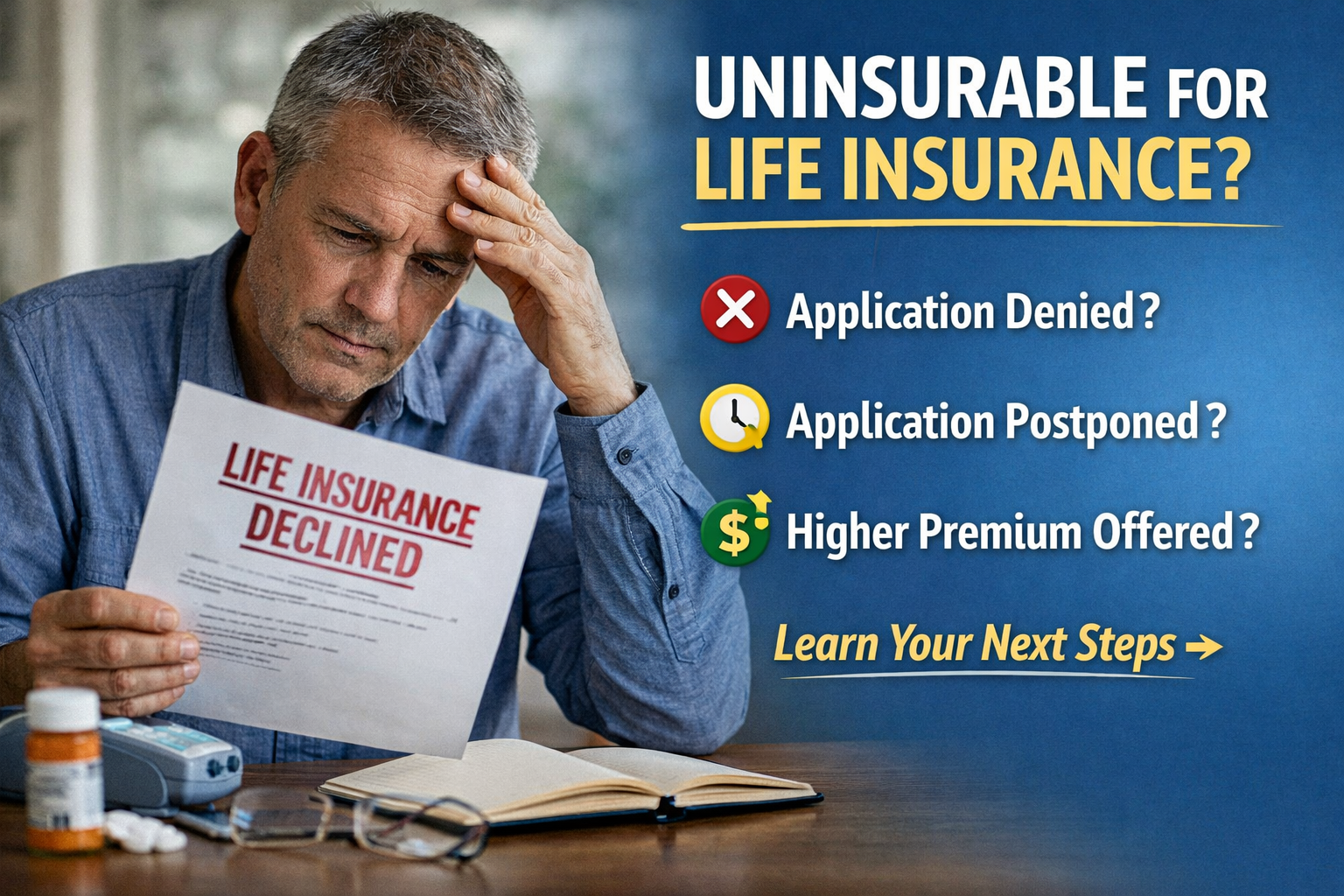
- Application denial reasons
- Postponed decisions
- Higher-than-expected offers
- When to reapply
- Alternative coverage options
What Does “Uninsurable” Really Mean?
In real life, “uninsurable” can mean a few different things. It may mean one company declined your application. It may mean the insurer postponed the case and wants to review it later. It may mean the policy was offered at a much higher price than expected because the company saw more risk.
So before you assume you can never get life insurance, it is important to know exactly what happened. A decline, postponement, and table-rated offer are not the same outcome.
Three common outcomes people confuse
- Declined application
- Postponed application
- Approved at a worse rate class
The Most Common Reasons Life Insurance Gets Denied
Serious medical conditions
Some diagnoses can trigger a decline depending on severity, recency, or treatment stability.
Recent diagnosis or treatment
Sometimes the issue is not the condition itself — it is that not enough time has passed yet.
Multiple risk factors
A few moderate issues together can make a case look much worse than one issue by itself.
Nicotine, drugs, or alcohol issues
Substance use can affect approval heavily, especially when there is a recent history.
Driving history
DUIs, reckless driving, and repeated violations can raise underwriting risk quickly.
Dangerous occupation or hobbies
Some high-risk jobs or activities create underwriting problems even with otherwise decent health.
Incomplete or inconsistent application
If application answers do not line up with records, the case can get delayed, repriced, or declined.
Too much requested coverage
A high face amount can invite more scrutiny than a smaller policy in the same case.
Denied vs Postponed vs Approved at a Higher Rate
Denied
The insurer refused to issue coverage under its current rules.
Postponed
The insurer wants to wait for more medical stability, more records, or more time to pass before making a decision.
Approved at a higher rate
You still got an offer, but the rate class or table rating made the price much worse than expected.
If you want the broader router page first, go here: Denied Life Insurance? Start Here →
Why a Postponement Is Not the Same as a Denial
A postponement often means the insurer thinks the case may become insurable later. The company may want more time after surgery, more time after a diagnosis, more stable lab results, or a longer history of controlled treatment.
This is why timing matters so much in life insurance. Applying six months later can sometimes look very different from applying today.
Common postponement reasons
- Recent diagnosis
- Recent hospitalization or procedure
- Medication not yet stable
- Follow-up tests still pending
- Recent cancer, stroke, or heart event
What to Do If You Were Denied or Postponed
1. Find out why
You need to know whether the issue was health, timing, driving, records, nicotine, or something else.
2. Do not assume every carrier will agree
Different insurers can look at the same profile very differently.
3. Review timing
Some cases improve after more treatment stability or more time from a recent event.
4. Look at alternative lanes
No-exam, simplified issue, guaranteed issue, or final expense may still make sense depending on the goal.
You May Still Have Options
A decline from one company is not always the end of the search. Compare alternatives first, especially if the issue was timing, carrier fit, or a risk factor that another insurer treats more favorably.
Alternative Coverage Options After a Denial
No-exam life insurance
Some applicants who do not fit one fully underwritten lane may still qualify through a different underwriting path.
Explore No Medical Exam Options →Instant issue
If the profile still fits a digital underwriting model, speed and simplicity may still be possible.
Explore Instant Issue →Guaranteed issue
This can be a fallback for harder-to-insure applicants, though costs and limits are usually less favorable.
Explore Guaranteed Issue →Final expense
For smaller permanent protection goals, final expense may fit better than broad term shopping after a decline.
Explore Final Expense →When Reapplying May Make Sense
After more treatment stability
Controlled follow-up care over time can change how a case is viewed.
After nicotine-free time
More time without smoking or nicotine can materially improve underwriting outcomes.
After a recent event moves further into the past
Stroke, heart issues, cancer treatment, and similar events are often judged heavily by recency.
To understand what the insurer is reviewing in the background, use Underwriting Life Insurance Process →
What If You Were Approved, But at a Much Worse Price?
This is often a rate-class issue, not a total decline. The insurer may have assigned a weaker class or added a table rating because it saw more risk than the original quote assumed.
That does not automatically mean the offer is the best available. Another company may classify the same case more favorably.
Better next step
- Review the actual reason for the weaker class
- Compare another carrier before accepting
- Understand how rate classes work
Helpful Next Pages
Denied Life Insurance Router
Use this if you need the quick split between application denial and claim denial first.
Open Denied Life Insurance Router →Underwriting Life Insurance Process
Use this if you want to understand how insurers review risk after the application is submitted.
Open Underwriting Guide →MIB Insurance Report
Use this if you want to understand one of the outside reports life insurers may check.
Open MIB Guide →Frequently Asked Questions About Being Uninsurable for Life Insurance
What makes you uninsurable for life insurance?
It depends on the carrier, but common reasons include serious health conditions, recent treatment, substance use issues, dangerous driving history, or multiple risk factors combined.
Does uninsurable mean forever?
Not always. Some cases are postponed rather than permanently declined, and some improve with more time, better control, or a different carrier fit.
What if my application was postponed instead of denied?
That usually means the insurer wants more stability, more records, or more time since a recent diagnosis or event before making a final decision.
Can another life insurance company still approve me?
Yes. Different carriers can evaluate the same profile differently, which is why comparison matters after a bad first outcome.
What options do I have after a decline?
Depending on the goal and the reason for the decline, alternatives can include no-exam policies, instant issue, guaranteed issue, or final expense coverage.
A Bad First Answer Is Not Always the Final Answer
The right next move depends on whether you were denied, postponed, or simply rated much worse than expected. Once you know which one happened, your options become much clearer.


